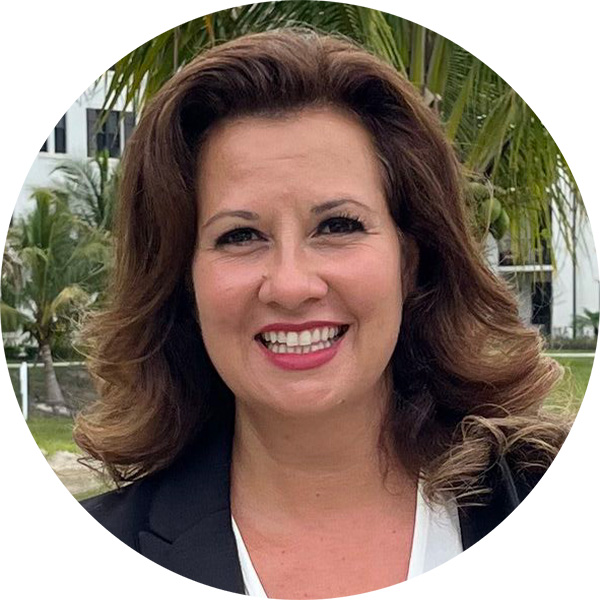
Last updated: July 2026 · Reviewed by Rev. Maria Felipe, Naples wedding officiant
Yes, you can have a Jewish or Jewish-interfaith wedding in Florida, and the right Jewish wedding officiant in Florida can make the traditions you love feel personal and true. Florida law lets any ordained minister solemnize your marriage, so a couple honoring Jewish tradition can be married here freely and legally. I am a non-denominational officiant in Naples, not a rabbi, and I want to be honest about that from the start. What I do is help couples build a ceremony that carries the Jewish rituals you love, the chuppah, the breaking of the glass, the seven blessings, into a service that feels like yours. For many interfaith couples, that honesty is exactly what they are looking for.
This guide explains what a Jewish wedding officiant in Florida can do, when a rabbi is the right call and when a non-denominational officiant fits better, how I weave Jewish traditions into a ceremony, and the simple legal steps for your marriage license in Collier County and across Southwest Florida.
Key Takeaways
- Florida sets no religious requirement on couples or officiants, so a Jewish or interfaith Jewish wedding is fully legal here (Fla. Stat. § 741.07).
- A rabbi is ideal for a fully traditional, halachic Jewish wedding. A non-denominational officiant fits interfaith couples and couples who want Jewish rituals in a more personal, flexible service.
- Interfaith Jewish marriage is common. Among Jewish Americans who married since 2010, about 6 in 10 wed a partner who is not Jewish (Pew Research Center).
- Jewish rituals like the chuppah, ketubah, sheva brachot, and breaking of the glass can all be honored in a ceremony I lead.
- Your Florida marriage license is valid for 60 days, and non-residents are exempt from the 3-day waiting period (Fla. Stat. §§ 741.04, 741.041).
Can you have a Jewish wedding in Florida?
You can, and couples do it here every season. Florida statute § 741.07 lists who may solemnize a marriage, including all ordained ministers and clergy, notaries public, and certain judicial officers. The law never asks the couple or the officiant to belong to a particular religion. That means a Jewish couple, or a couple where one partner is Jewish and one is not, can marry legally anywhere in the state with the officiant of their choice.
The real question is usually not whether it is legal, but who should lead the ceremony. That answer depends on how traditional you want the service to be, and whether both of you share the Jewish faith.
Rabbi or non-denominational officiant: which is right for you?
I always tell couples the truth here, because it matters. If you both are Jewish and you want a fully traditional wedding under Jewish religious law, a rabbi or cantor is the right person to marry you. A rabbi can sign a religious ketubah, recite the blessings in Hebrew from within the tradition, and lead a service that is halachically complete. I would never pretend to replace that.
Where a non-denominational officiant like me fits is a little different, and it is a need I see constantly in Southwest Florida:
- Interfaith couples. Many rabbis will not officiate a wedding between a Jewish partner and a partner of another faith. When that happens, couples are left searching, and that is often when they find me.
- Couples who want tradition without strict religious framing. You love the chuppah and the glass, but you want the words to feel personal and spiritual rather than formal and doctrinal.
- Destination and elopement couples. You are flying into Naples or Marco Island and want a warm, flexible officiant who can travel to your beach or venue.
- Couples who want a co-officiated ceremony. Some pairs bring a rabbi for the Jewish elements and an officiant for the interfaith or English portions. I am glad to work alongside clergy when that is what you want.
Because I am ordained as a non-denominational minister, I can legally and lovingly marry an interfaith Jewish couple without asking either of you to convert or set your background aside. My guide on interfaith wedding officiants in Florida goes deeper on blending two faiths, and my overview of a non-denominational wedding ceremony explains how a flexible service comes together.
Jewish wedding traditions I can honor in your ceremony
Part of my work is learning what each ritual means to you and your family, then holding space for it with care. These are the Jewish traditions couples most often ask me to include, and how they usually feel in the moment:
- The chuppah. The canopy that represents the home you are building together, open on all sides for community and welcome. On a Naples beach, a simple four-post chuppah against the water is breathtaking.
- The ketubah signing. Many interfaith couples choose a modern or bilingual ketubah, a marriage covenant you sign before or during the ceremony. I can build the signing into the service as a quiet, meaningful moment.
- The seven blessings (sheva brachot). Traditionally seven blessings offered over the couple. I often invite family members or friends to read them, in Hebrew, English, or both, so loved ones are woven into the ceremony.
- Circling. One or both partners circle the other, a gesture of protection and devotion that many couples find deeply moving.
- The kiddush cup. Sharing wine from a single cup as a symbol of the life you will share.
- Breaking of the glass. The joyful close, the stomp, the shout of mazel tov, and the celebration begins. It is almost always the moment guests remember most.
You do not have to include all of these, and you can add rituals from another tradition too. For interfaith couples, I often pair a Jewish element with a symbolic unity ritual like a sand ceremony or handfasting, so both sides of the family see themselves in the day.
How I plan a Jewish-interfaith ceremony with you
Every couple I marry gets a real conversation first. I want to hear your story, what Judaism means in your family, what your partner brings, and where you want the ceremony to land between tradition and personal. From there I draft a service and share it with you, and we shape it together until it feels honest.
If your family is bicultural, my bilingual background helps. I officiate in both English and Spanish, so a Spanish-speaking grandparent and a Hebrew reading can live side by side in the same ceremony. Nobody in your circle has to feel left out of the moment. You can read more about my ceremony packages to see what is included at each level.
The legal side: your Florida marriage license
The ceremony is the heart of the day, and the license is the paperwork that makes it official. Here is what applies to your Jewish or interfaith wedding in Southwest Florida:
- Where to apply. Any Florida county clerk can issue your license, and it is valid statewide. Local couples usually use the Collier County Clerk in Naples.
- Residency. There is no residency requirement. Couples fly in from all over the country to marry here.
- Waiting period. Florida residents wait three days after applying unless they finish a registered premarital course. Couples who both live outside Florida are exempt from the waiting period (Fla. Stat. § 741.04).
- Validity. Once issued, the license is valid for 60 days. Your officiant signs it after the ceremony and returns it to the clerk.
If you are traveling in for the wedding, my guide on getting married in Florida as a non-resident walks through the county clerk steps in detail.
Planning a Jewish wedding in Naples and Southwest Florida
Southwest Florida is a natural home for a warm, personal Jewish or interfaith wedding. Beach settings in Naples, Marco Island, and Bonita Springs give you an open sky for the chuppah, and the region is used to welcoming destination couples and their families. I serve Naples, Bonita Springs, Estero, Fort Myers, Cape Coral, Marco Island, and the islands, so wherever your venue sits, I can usually come to you.
My best advice is to book your officiant early, especially in the January to April high season, and to bring me into the planning before the ceremony wording is locked. The earlier we talk, the more room we have to make the traditions land the way you picture them.
Frequently asked questions
Are you a rabbi?
No, and I will always be upfront about that. I am an ordained non-denominational minister, not a rabbi. For a fully traditional halachic Jewish wedding, a rabbi or cantor is the right choice. For interfaith couples, or couples who want Jewish traditions in a more personal ceremony, a non-denominational officiant is often the better fit.
Can you officiate an interfaith Jewish wedding in Florida?
Yes. This is one of the most common reasons couples reach out to me. Many rabbis decline interfaith weddings, so when one partner is Jewish and one is not, I can create a ceremony that honors the Jewish traditions you love while welcoming both families with equal warmth.
Will you break the glass and include a chuppah?
Absolutely. The chuppah, the breaking of the glass, the seven blessings, circling, and the kiddush cup can all be part of a ceremony I lead. We choose together which rituals to include and how to word them so they feel true to you.
Can you co-officiate with our rabbi?
Yes. Some couples want a rabbi for the Hebrew and Jewish elements and an officiant for the interfaith or English portions of the service. I am glad to coordinate and share the ceremony with clergy when that is what you envision.
Do you officiate in Spanish as well as English?
Yes. I officiate in both English and Spanish, so bicultural and bilingual families can follow every part of the ceremony. Hebrew readings and Spanish blessings can live in the same service, and no one has to feel left out.
Let’s build a ceremony that honors your tradition
The rituals your family has carried for generations deserve to be held with care, and so do the two of you. If you are planning a Jewish or interfaith Jewish wedding in Naples or anywhere in Southwest Florida, I would be honored to help you shape a ceremony that carries the traditions you love. Take a look at my ceremony packages to see how we can work together, or reach out through my contact page and tell me your story. For a wider look at choosing the right person to marry you, my guide on how to hire a Florida wedding officiant is a good next read.
Sources: The Florida Senate, Statute § 741.07; The Florida Senate, Statute § 741.04; The Florida Senate, Statute § 741.041; Pew Research Center, Jewish Americans in 2020.