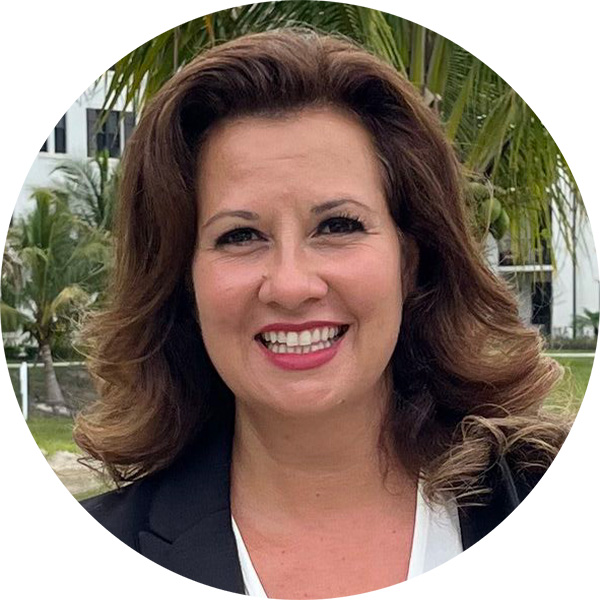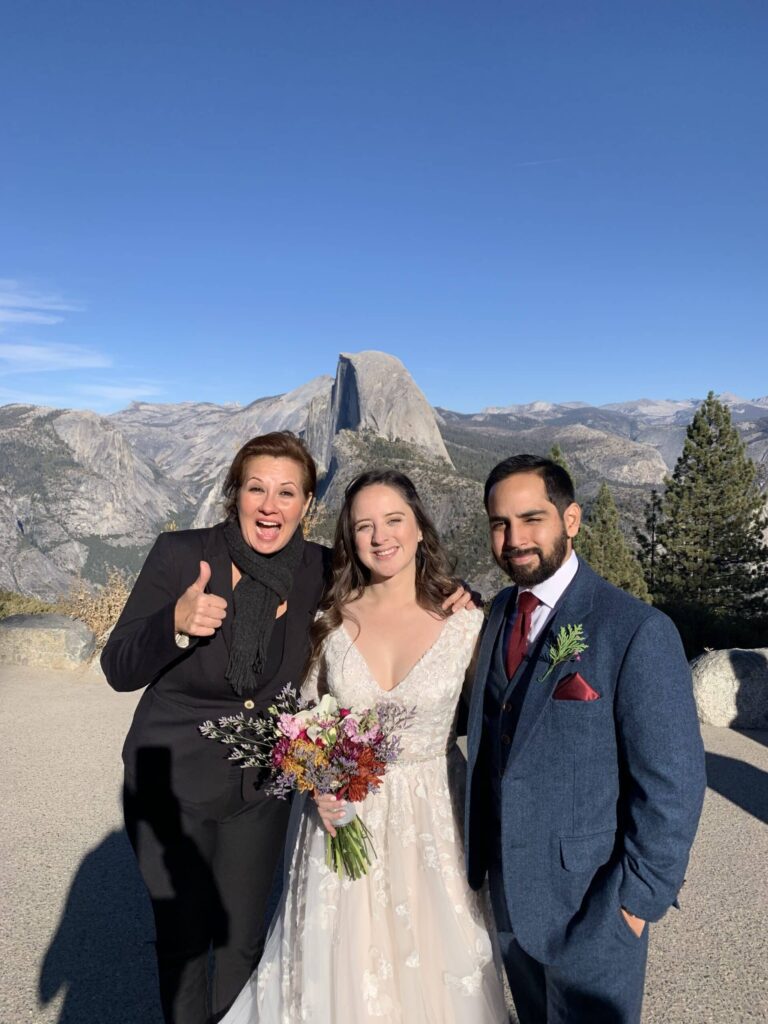
Last updated: July 2026 · Reviewed by Rev. Maria Felipe, Naples wedding officiant
Last updated: June 2026
Key Takeaways
A Florida wedding officiant is the person who legally performs and signs your marriage, and the good news is that our state keeps it simple. Florida does not require an officiant to register or hold a license with the state (Fla. Stat. 741.07). Ordained ministers, notaries public, and judicial officers can all solemnize a marriage. Your license is valid for 60 days statewide (Fla. Stat. 741.041), and a great officiant handles far more than the paperwork. They hold the heart of your ceremony.
I am Rev. Maria Felipe, and I have had the joy of marrying couples across Southwest Florida for years, from quiet beach elopements on Marco Island to bilingual family celebrations in Naples. When couples first reach out, the same question comes up again and again. What does a Florida wedding officiant actually do, and how do I choose the right one? This guide walks you through the legal side, the loving side, and everything in between, so you can say yes to the person who will hold space for one of the most sacred moments of your life.
What is a Florida wedding officiant?
A Florida wedding officiant is the authorized person who leads your wedding ceremony, pronounces you legally married, and signs your marriage license so the union is recorded with the state. In Florida the role blends two things, a legal function and a spiritual one. The officiant makes the marriage valid in the eyes of the law, and a thoughtful officiant also shapes the words, the blessings, and the rituals that make the moment yours.
Some couples picture a stranger reading a script they have never seen. That is not how I work, and it is not what you should settle for. The officiant you choose sets the tone for your entire ceremony, so it is worth understanding both what the law requires and what a caring officiant brings.
Who can legally be a wedding officiant in Florida?
Under Florida Statute 741.07, the people authorized to solemnize a marriage are all regularly ordained ministers of the gospel or clergy, all judicial officers including retired judicial officers, clerks of the circuit courts, and notaries public. Florida is one of the friendlier states for couples here, because that list is broad and the rules are clear.
This is also why a notary public can marry you in Florida, which surprises many out of state couples. If you want the full breakdown of every category, including whether a friend or family member can officiate, I cover it in detail in my guide on who can officiate a wedding in Florida.
Does a wedding officiant need a license in Florida?
No, a wedding officiant does not need a state license or registration in Florida. Unlike a handful of other states that ask officiants to register with a county or court before performing a ceremony, Florida Statute 741.07 sets no registration step at all. As long as the officiant falls into one of the authorized categories, such as an ordained minister or a notary public, they can legally perform your wedding the very same day.
That simplicity is a gift, especially for destination couples. It does mean the responsibility for choosing someone experienced sits with you, because the state is not screening officiants for quality. A legally valid celebrant is easy to find. A wonderful one is worth seeking out.
What does a Florida wedding officiant actually do?
A Florida wedding officiant does far more than show up and read vows. A dedicated minister guides you through five core duties, the consultation, writing your ceremony, guiding your rituals, leading the moment, and signing your marriage license, holding both the logistics and the emotional heart of the day. Here is what that looks like in my own practice with couples across Naples and Southwest Florida.
- Consultation and connection. We talk about your story, your beliefs, your families, and the feeling you want the ceremony to carry.
- Writing your ceremony. I craft a ceremony that sounds like you, whether that is deeply spiritual, gently secular, or a blend of two cultures and languages.
- Guiding rituals. Unity ceremonies, sand blending, candle lighting, handfasting, and blessings, chosen to mean something to you.
- Leading the moment. On the day, I set the pace, calm the nerves, and hold the space so you can simply be present.
- Pronouncing and signing. I legally pronounce you married and complete and sign the marriage license so it can be returned to the clerk and recorded.
From my years officiating, the signing is quick, but the trust you place in your officiant is everything. That is the part no statute can describe.
How much does a wedding officiant cost in Florida?
In my experience officiating across Southwest Florida, wedding officiant fees here tend to fall between roughly $200 for a short, no frills ceremony and around $800 for a fully custom, written from scratch experience. The price reflects how much personalization, consultation time, and travel are involved. To keep things transparent, here are my own ceremony packages so you can see exactly what different levels include.
| Package | Investment | Best for |
|---|---|---|
| Custom “I Do!” Ceremony | $795 | Couples who want a fully personalized ceremony, a consultation, unlimited unity rituals, and an officiant who arrives an hour early |
| “I Do!” Ceremony (most popular) | $595 | Couples who want a beautiful pre written ceremony, one unity ritual, and a relaxed, guided experience |
| “Quick I Do!” Ceremony | $245 | Elopements and small ceremonies that need the oath of marriage, photos, and the license signed with care |
When you compare officiants, look past the number to what is inside the package. A slightly higher fee that includes a real consultation and a ceremony written for you is almost always the better value than a flat rate for a script you never get to shape.
How to choose the right wedding officiant in Florida
The best way to choose a Florida wedding officiant is to look for experience, a personal connection, and a willingness to make the ceremony truly yours. Because the state does not vet officiants, your own questions are the real screening process. Here is the checklist I share with couples who are interviewing officiants, including me.
- Experience. How many ceremonies have they performed, and in your kind of setting, whether that is a beach, a venue, or a backyard?
- Personalization. Will they write a custom ceremony, or do they read the same script for everyone?
- Connection. Do you feel calm, seen, and comfortable when you speak with them?
- Inclusivity. Are they happy to honor your faith, blend traditions, or perform a bilingual or interfaith ceremony?
- Reliability. Do they confirm the legal details, arrive early, and handle the license correctly?
- Reviews. What do past couples say about how they felt on the day?
Trust your heart here. You will remember how your officiant made you feel long after you forget the exact words.
Florida marriage license requirements your officiant will check
Before any Florida officiant can marry you, you need a valid Florida marriage license, and a good officiant will confirm the timing so nothing goes wrong on your wedding day. The license is issued by any Florida county clerk and is valid for 60 days statewide under Florida Statute 741.041. Here is what couples marrying in our area, Collier County, should know.
- Cost. A Collier County marriage license is $93.50, or $61.00 if you complete an approved Florida premarital preparation course.
- Waiting period. Florida residents face a 3 day waiting period, which is waived when you complete a qualifying premarital course of at least 4 hours. Non residents have no waiting period.
- Premarital course. The course must be finished within one year before you apply, and it both removes the wait and lowers the fee.
- Validity. Once issued, the license must be used within 60 days, anywhere in Florida.
- After the ceremony. Your officiant signs the license, and it is returned to the clerk to be recorded as your certificate of marriage.
For the full walkthrough of applying, what to bring, and how to get your certified copy, see my guides on how to get married in Florida and the Florida certificate of marriage.
Religious, non-denominational, and bilingual ceremonies
One of the gifts of Florida’s open officiant law is freedom. You can have a deeply religious ceremony, a non-denominational blessing, an interfaith blend, or a bilingual celebration in English and Spanish, and all of them are equally valid. As a non-denominational minister, I meet couples exactly where their hearts are, and I often weave two faiths or two languages into one flowing ceremony.
If you and your partner come from different backgrounds, or if your families speak different languages, your ceremony can honor all of it. I offer bilingual ceremonies so that every grandmother, every cousin, and every dear friend feels included in the words. You can read more on my bilingual wedding officiant page.
Frequently asked questions about Florida wedding officiants
Can a notary public marry you in Florida?
Yes. Florida Statute 741.07 lists notaries public among those authorized to solemnize a marriage, which is why a Florida notary can legally perform your wedding. Florida is one of only a few states that allows this, so it is a common and fully valid option for couples here.
Does my officiant need to register with the county in Florida?
No. Florida does not require wedding officiants to register or hold a state license. As long as your officiant is an ordained minister, clergy, a judicial officer, a clerk of court, or a notary public, they are authorized to perform your ceremony with no extra registration step.
How far in advance should I book a Florida wedding officiant?
I recommend booking your officiant as soon as your date and venue are set, often 6 to 12 months ahead for peak season weddings in Southwest Florida. Experienced officiants book early, especially for popular beach dates, and an early booking gives us time to craft a ceremony that truly fits you.
Can the same officiant help with both my ceremony and my license?
Your officiant does not issue the license, since that comes from the county clerk, but a caring officiant will guide you through the timing, the waiting period, and the premarital course discount so your paperwork is ready. On the day, the officiant completes and signs the license so it can be recorded.
Let’s create a ceremony that feels like you
Choosing your Florida wedding officiant is choosing the voice that will guide one of the most meaningful moments of your life. If you are planning a wedding anywhere in Naples, Bonita Springs, Estero, Fort Myers, Cape Coral, Marco Island, or the surrounding Southwest Florida coast, I would be honored to walk this path with you. Reach out through my contact page, or explore my ceremony packages to find the one that fits your heart and your day. Wherever your love leads, may your ceremony be a true reflection of the two of you.
If you and your partner come from different religious backgrounds, my guide to finding an interfaith wedding officiant in Florida explains how I blend two traditions into one ceremony that welcomes both families.
Not sure which title you are looking for? Start with every name for people who marry people, explained.