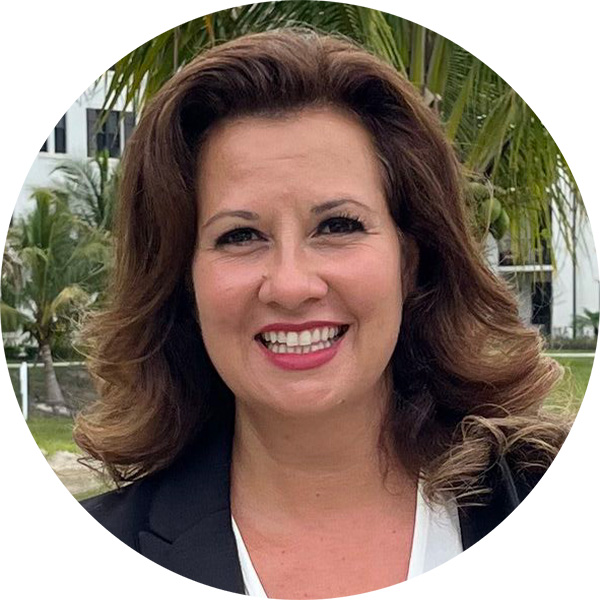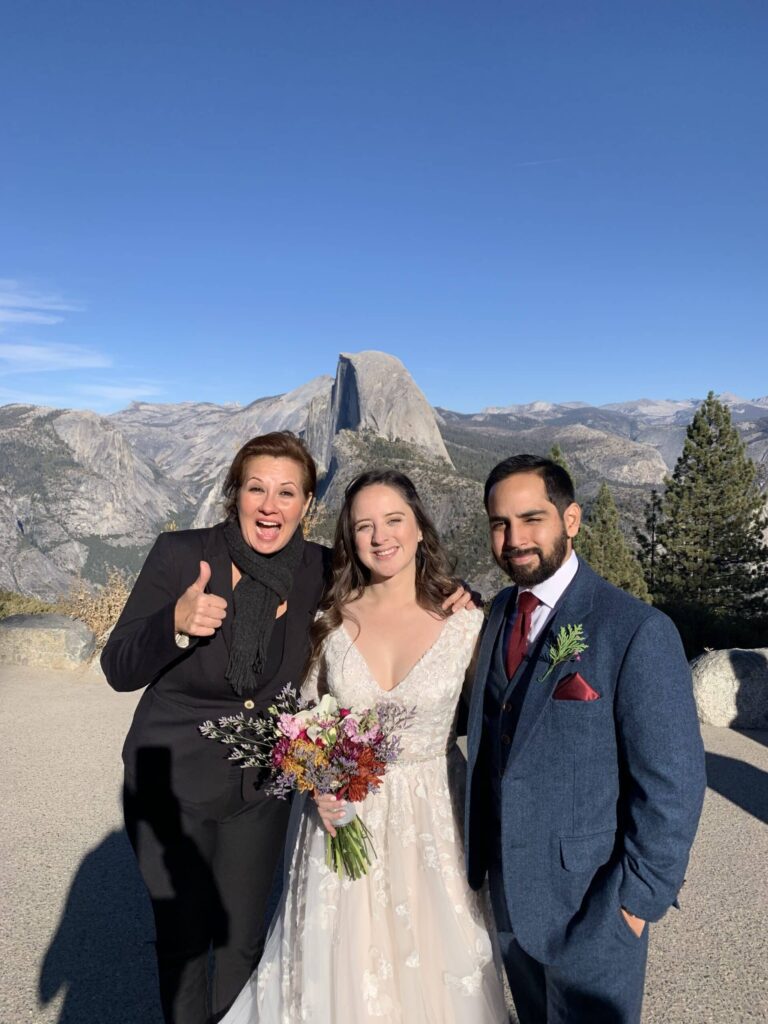
Yes, you can absolutely have an interfaith wedding in Florida, and you can have a beautiful one. Florida law does not require you, your partner, or your officiant to share a single faith, which means two people from different religious backgrounds can marry here freely and legally. As a non-denominational minister in Naples, I have stood with couples who honored a Catholic grandmother and a Jewish grandfather in the same ceremony, and I can tell you the result is warm, personal, and deeply moving.
This guide walks you through what an interfaith wedding officiant in Florida actually does, how I blend two traditions into one ceremony that feels whole, and the simple legal steps for your marriage license in Collier County and across Southwest Florida.
Key Takeaways
- Florida imposes no religious requirement on couples or officiants, so interfaith marriages are fully legal here (Fla. Stat. § 741.07).
- An interfaith officiant creates neutral, loving ground where both faiths are honored rather than one being chosen over the other.
- Interfaith marriage is common and growing. About 4 in 10 Americans who married since 2010 have a spouse from a different religious group.
- Your Florida marriage license is valid for 60 days. Non-Florida residents are exempt from the 3-day waiting period that applies to state residents.
- Unity rituals, blessings, and readings from both traditions let your ceremony reflect the two of you honestly.
Is an interfaith wedding legal in Florida?
It is, without any special permission. Florida statute § 741.07 lists who may solemnize a marriage, including ordained ministers and clergy, notaries public, and certain judicial officers. Nowhere does the law say the couple must belong to the same religion, or that the officiant must match either partner’s faith. That single fact is what makes interfaith weddings so accessible here.
Because I am ordained as a non-denominational minister, I can legally marry a Hindu and a Christian, a Jewish partner and one who is spiritual but unaffiliated, or any pairing you bring me. I am not asking either of you to convert or to set your background aside. My role is to hold space for both stories at once. If you want to understand the broader rules for who can perform your ceremony, my guide on what to expect from a non-denominational wedding ceremony covers it in more depth.
What does an interfaith wedding officiant do?
An interfaith officiant weaves two spiritual traditions into one ceremony so that no one in your families feels left out. Practically, that means I sit down with both of you, learn what each faith means to you, and design a ceremony that carries elements from both without pitting them against each other.
Some couples want a strong religious presence from both sides, with scripture and traditional blessings. Others want something gentler, more spiritual than doctrinal, that simply nods to where they each come from. Both are right. My job is to listen closely, then write a ceremony in language that feels true to you rather than borrowed from a template. I officiate in English and Spanish, which matters for many bicultural and bilingual families in Southwest Florida who want grandparents to follow every word.
Why couples choose an interfaith or non-denominational officiant
Interfaith love is not a niche anymore. According to Pew Research Center, about 39% of Americans who married since 2010 have a spouse from a different religious group, compared with just 19% of those who wed before 1960. Couples are blending backgrounds more than ever, and they want a ceremony that reflects that honestly.
Many couples come to me after a house of worship declined to marry them, or asked one partner to convert, or would only perform the ceremony inside specific walls. I understand how tender that can feel. An independent interfaith officiant removes that pressure. There is no single congregation to answer to, no requirement that one faith win. You get to keep both, and your wedding becomes a true meeting of two families rather than a compromise.

How I blend two faith traditions into one ceremony
The heart of an interfaith ceremony is balance. I build the ceremony so both traditions appear with equal warmth, and so the flow feels natural instead of stitched together. Here is how I usually approach it.
- Opening and welcome. I set a tone of unity, naming both families and both faiths with respect from the very first words.
- Readings from both traditions. A passage of scripture beside a poem, a Hebrew blessing beside a Sanskrit verse, whatever speaks to you both.
- A shared unity ritual. This is where two become one visibly. Sand ceremonies, a shared cup, or handfasting all translate across faiths beautifully.
- Blessings from each side. Where families wish to participate, I invite a parent or elder from each tradition to offer words.
- Vows and pronouncement. Your promises, in your voice, sealed in a way that honors both of you.
Unity rituals are especially powerful for interfaith couples because they are symbolic rather than doctrinal, so both sides can embrace them. If you want ideas, my guide to non-denominational ceremony elements shows several you can adapt.
Interfaith ceremony elements you can include
- Dual readings that pair a text from each faith side by side.
- A sand ceremony where two colors pour into one vessel and cannot be separated again.
- A shared cup or wine blessing, a gesture that appears in many traditions.
- Handfasting, the binding of hands with cords, often in colors meaningful to each family.
- A moment of silence or shared prayer that lets guests of any belief join in from their own heart.
- Bilingual passages so every generation, in every language, feels included.
The legal side: your Florida marriage license
The ceremony is the soul of the day, but the license makes it official. The good news is that Florida keeps this simple, and your religions have nothing to do with the paperwork. Here is what interfaith couples in Southwest Florida need to know.
- Where to apply. Any Florida county clerk can issue your license, and it is valid statewide. Couples marrying in Naples usually apply at the Collier County Clerk of Court.
- The 3-day waiting period. Under Fla. Stat. § 741.04, Florida residents wait three days after applying unless they complete a registered premarital preparation course, which waives the wait.
- Non-residents are exempt. If you both live outside Florida, that 3-day waiting period does not apply to you, so a destination wedding here is straightforward.
- Validity. Once issued, your license is good for 60 days. I sign it after your ceremony and return it to the clerk so your marriage is recorded.
If you are traveling in for your wedding, my complete guide to getting married in Florida as a non-resident walks through every step. County rules can shift, so I always suggest confirming current fees and hours directly with your local clerk before your appointment.
Planning an interfaith wedding in Southwest Florida
Beyond the ceremony script, a few gentle choices make interfaith weddings flow. Talk with both families early so no one is surprised by a ritual they do not recognize. Consider a short note in your program explaining each tradition you include, which helps every guest feel like a participant rather than an observer. And choose a setting that feels open to everyone. The beaches and gardens of Naples, Bonita Springs, Marco Island, and Fort Myers give you neutral, beautiful ground that belongs to no single faith.
Most of all, lead with love. When I meet with interfaith couples, the tradition that matters most is the one you are building together. Everything else supports that.
Frequently asked questions
Can a non-denominational minister legally marry an interfaith couple in Florida?
Yes. Florida statute § 741.07 allows ordained ministers and clergy to solemnize marriages, and the law sets no requirement that the officiant or couple share a religion. As an ordained non-denominational minister, I can legally marry couples of any two faiths anywhere in the state.
Do we have to choose one religion for the ceremony?
Not at all. An interfaith ceremony is designed so both traditions appear with equal warmth. You can include readings, blessings, and unity rituals from each side, or keep things more spiritual and symbolic. It is your ceremony to shape.
Is there a waiting period for our Florida marriage license?
Florida residents wait three days after applying unless they complete a registered premarital preparation course. Couples who both live outside Florida are exempt from the waiting period, which makes a Southwest Florida destination wedding simple. The license is valid for 60 days once issued.
Can you perform a bilingual interfaith ceremony?
Yes. I officiate in both English and Spanish, which lets me include passages and blessings in either language. For bicultural families in Southwest Florida, this means grandparents and relatives can follow and feel part of every moment.
What if our families practice very different traditions?
That is exactly where an interfaith officiant helps most. I meet with you to understand what each faith means to your families, then design a ceremony that honors both with care. Unity rituals like a sand ceremony or handfasting are symbolic rather than doctrinal, so relatives of any belief can embrace them together.
Let’s create a ceremony that honors both of you
Your love does not have to fit inside one tradition to be sacred. If you are planning an interfaith wedding in Naples or anywhere in Southwest Florida, I would be honored to help you shape a ceremony where both faiths, both families, and both of you are fully welcome. Take a look at my ceremony packages to see how we can work together, or reach out through my contact page and tell me your story. For a wider look at choosing the right officiant, my guide on how to hire a Florida wedding officiant is a good next read.
Sources: Pew Research Center, Interfaith marriage in the U.S.; The Florida Senate, Statute § 741.04; The Florida Senate, Statute § 741.07.