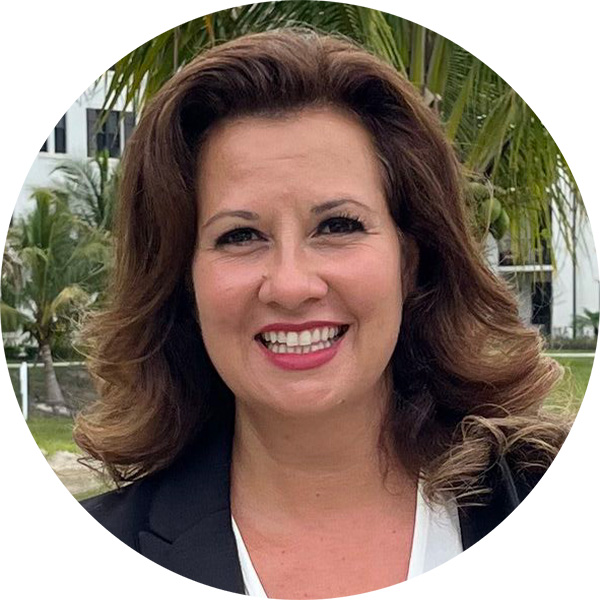
Last updated: July 2026 · Reviewed by Rev. Maria Felipe, Naples wedding officiant
More couples than ever are choosing a non-denominational wedding ceremony, and I understand why. After officiating hundreds of weddings across Southwest Florida, I’ve seen firsthand how powerful a ceremony can be when it’s shaped by the couple’s values instead of a single religious tradition. According to a Pew Research Center study (2024), nearly 28% of U.S. adults now identify as religiously unaffiliated, yet most still consider themselves spiritual. That’s exactly the space a non-denominational ceremony fills: sacred, personal, and free from rigid doctrine.
TL;DR: A non-denominational wedding ceremony is spiritual without being tied to one religion. It’s fully legal in Florida, completely customizable, and can include religious elements if you want them. According to Pew Research (2024), 28% of Americans are religiously unaffiliated but still seek meaningful rituals, making non-denominational ceremonies one of the fastest-growing ceremony types.
What Is a Non-Denominational Wedding Ceremony?
A non-denominational wedding ceremony is a spiritual celebration that isn’t tied to any single religion or church. The American Marriage Ministries notes that non-denominational ceremonies have grown over 30% in the past decade as couples seek personalized alternatives to traditional church weddings. As a non-denominational minister and A Course in Miracles practitioner, I believe love itself is the highest authority in any ceremony.
The word “non-denominational” simply means “not belonging to a specific denomination.” It doesn’t mean anti-religious. It means open. Your ceremony can draw from Christian scripture, Buddhist teachings, Sufi poetry, or none of the above. The structure honors the sacredness of your commitment without requiring either of you to belong to a particular faith.
In my years officiating in Naples and across SWFL, I’ve married couples from every background imaginable. Catholic and Jewish. Spiritual and agnostic. Two different branches of Christianity. The beauty of non-denominational is that it creates space for everyone in the room to feel included, not just the couple at the altar.
Citation capsule: A non-denominational wedding ceremony is a spiritual celebration not bound to any single religion, and these ceremonies have grown over 30% in the past decade according to the American Marriage Ministries. Non-denominational officiants like Rev. Maria Felipe draw from multiple traditions to create inclusive, personalized ceremonies in Southwest Florida.
How Does a Non-Denominational Ceremony Differ from Religious, Civil, and Interfaith Weddings?
Understanding the differences helps you choose the right ceremony style for your relationship. A 2024 report from The Knot found that 43% of weddings now include a blend of spiritual and secular elements, reflecting a clear shift away from strictly traditional formats. Here’s how the main ceremony types compare.
Religious ceremony
A religious ceremony follows the liturgy and customs of a specific faith tradition: Catholic, Jewish, Baptist, Hindu, or another denomination. It typically takes place in a house of worship with a clergy member from that denomination. The structure, readings, and language are largely prescribed by church or temple guidelines. Both partners may need to belong to or convert to that faith.
Civil ceremony
A civil ceremony is a legal proceeding performed by a judge, magistrate, or justice of the peace. It’s usually brief, around 5-10 minutes, and focuses on the legal requirements of marriage. There’s no spiritual language, no readings, and minimal personalization. It gets the paperwork done, but many couples feel it lacks emotional depth.
Interfaith ceremony
An interfaith ceremony intentionally blends elements from two or more specific religions. A Jewish-Catholic wedding, for example, might include both a chuppah and a unity candle. This requires an officiant skilled in multiple traditions, and sometimes two officiants co-lead the ceremony.
Non-denominational ceremony
A non-denominational ceremony sits in the sweet spot. It’s spiritual without doctrine. Personal without being purely transactional. You can include a prayer, a Bible reading, a moment of silence, or a poem by Rumi, and none of those choices conflict with the ceremony’s framework. The officiant builds the ceremony around your relationship, not around institutional rules.
Citation capsule: According to The Knot’s 2024 wedding report, 43% of modern weddings blend spiritual and secular elements. Non-denominational ceremonies occupy a middle ground between religious and civil formats, offering spiritual depth and full personalization without requiring adherence to any single denomination’s rules or traditions.
What Does a Typical Non-Denominational Ceremony Include?
While every ceremony I perform is unique, the structure gives your guests a familiar rhythm while leaving room for deeply personal moments. Research from Brides.com shows the average wedding ceremony lasts 20-30 minutes, which is the range I recommend for a non-denominational celebration. Here’s what most of my ceremonies look like.
The welcome and opening words (2-3 minutes)
I greet your guests and set the tone. This is where I might share a brief reflection on love, offer a moment of gratitude, or invite everyone to be fully present. If your ceremony is bilingual, I open in both English and Spanish so every guest feels welcomed from the first word.
Readings or reflections (3-5 minutes)
You choose the readings. Some couples ask a friend or family member to read a favorite poem. Others want scripture, song lyrics, or a passage from a book that shaped their relationship. I’ve had couples choose everything from Corinthians to Khalil Gibran to a letter they wrote each other on their first anniversary.
The couple’s story (2-3 minutes)
This is my favorite part and something many officiants skip. I tell your story, how you met, what made you fall in love, the moment you knew. I gather these details during our consultation, and when your guests hear me share them at the ceremony, it transforms the room. People laugh. People cry. It becomes unmistakably yours.
Vows and ring exchange (5-7 minutes)
You can write your own vows, use traditional language, or work with me to create something in between. The ring exchange follows, and I guide you through it so the moment feels natural even if your hands are shaking. Many of my couples tell me afterward that this was the most powerful part of the day.
Unity ceremony (3-5 minutes, optional)
Sand blending, candle lighting, wine blending, tree planting, handfasting, or a unity painting. Unity ceremonies add a visual, symbolic element that your guests remember long after the reception ends. I include unlimited unity ceremonies in my Custom “I Do!” package.
Pronouncement, kiss, and presentation (1-2 minutes)
The moment everyone’s been waiting for. I pronounce you married, you kiss, and your guests erupt. Then I present you to the room as a married couple for the first time. After the celebration, we handle the marriage license signing, either at a private signing table or right there with your wedding party.
How Does Rev. Maria Felipe Personalize Each Ceremony?
Personalization is the whole point of choosing a non-denominational wedding officiant. According to WeddingWire’s 2024 ceremony trends report, 78% of couples say having a personalized ceremony was more important to them than the reception. That stat matches everything I’ve experienced: the ceremony is the heart.
My process starts with a real conversation. During our consultation, I ask about your relationship, your values, what makes you laugh together, and what challenges you’ve overcome. As an A Course in Miracles student and teacher, I approach every ceremony from a place of love, not performance. My job isn’t to be the star of the ceremony. My job is to hold sacred space for the two of you.
I’ve woven in everything from a grandmother’s favorite hymn to a salsa dance break to a moment of silence for a parent who passed. One couple asked me to include a reading in Spanish for the bride’s mother, who spoke no English. Her tears told me we got it right. That kind of detail is what separates a personalized ceremony from a template.
If you want religious elements, we include them. If you want pure spirituality with no religious language at all, we do that. If you want humor, poetry, or a surprise element for your partner, I’ll help you plan it. Nothing is off the table as long as it honors your love.
Citation capsule: WeddingWire’s 2024 ceremony trends report found that 78% of couples prioritize a personalized ceremony over the reception. Rev. Maria Felipe, a non-denominational minister and A Course in Miracles practitioner in Naples, FL, personalizes each ceremony through in-depth consultations that incorporate the couple’s story, cultural traditions, and spiritual values.
Can You Include Religious Elements in a Non-Denominational Wedding?
Yes, absolutely. A 2023 survey by The Knot found that 62% of couples who chose a non-denominational officiant still included at least one religious element in their ceremony. Non-denominational doesn’t mean non-spiritual or non-religious. It means you’re not locked into one tradition’s rulebook.
Common religious elements couples add to their non-denominational ceremony include:
- Scripture readings from the Bible, Torah, Quran, or Bhagavad Gita
- Prayers at the opening, before the vows, or as a blessing
- Hymns or worship songs performed live or played during the processional
- Cultural rituals like breaking the glass (Jewish tradition) or the lasso ceremony (Latin American tradition)
- A blessing from a family member who is clergy or a spiritual leader in their community
The freedom is in the choosing. You take what resonates and leave the rest. I’ve officiated ceremonies that felt deeply Christian in spirit and others that drew from Eastern philosophy. Both were non-denominational because the couple, not a doctrine, shaped the ceremony.
Is a Non-Denominational Wedding Ceremony Legal in Florida?
Yes. A non-denominational ceremony is 100% legal in the state of Florida. Under Florida Statute 741.07, any ordained minister, elder, or other clergy member of any church can legally perform a marriage ceremony. The law makes no distinction between denominational and non-denominational clergy. I am a legally ordained non-denominational minister, and I’ve signed hundreds of Florida marriage certificates.
Here’s what you need for a legally valid ceremony in Florida:
- A valid Florida marriage license (apply at your county clerk’s office, no waiting period for non-Florida residents (per Fla. Stat. 741.04(5)))
- A legally authorized officiant (that’s me)
- The ceremony itself, including your spoken consent to marry
- The signed marriage certificate, which I complete and help you file
There’s no requirement for witnesses in Florida, though most couples have their wedding party present for the signing. I handle all the legal paperwork so you can focus on celebrating.
Citation capsule: Under Florida Statute 741.07, non-denominational wedding ceremonies are fully legal. Any ordained minister or clergy member can perform marriages regardless of denomination. Florida requires Florida residents wait 3 days unless they complete a state-approved premarital course; non-Florida residents are exempt (per Fla. Stat. 741.04(5)) seeking a marriage license, and no witnesses are legally required for the ceremony.
Will a Non-Denominational Ceremony Feel Meaningful?
This is the concern I hear most often, and I understand it completely. A Psychology Today analysis on wedding rituals found that ceremonies with personal storytelling and shared rituals create stronger emotional bonds than those relying solely on traditional scripts. Meaning doesn’t come from a denomination. It comes from intention.
In my experience, couples who go through the personalization process, sharing their story, choosing their readings, writing their own vows, consistently tell me their ceremony was the most emotional part of the entire wedding. Guests say the same thing. When a ceremony is built around real love and real life, it resonates in a way that no generic script can.
As someone rooted in A Course in Miracles, I believe every ceremony is holy because love is holy. You don’t need stained glass or Latin hymns for that, though you can have them if you want. What makes a ceremony meaningful is the presence, the honesty, and the commitment you bring to it. My role is to create a space where all of that can unfold naturally.
Sample Non-Denominational Ceremony Timeline
Here’s a sample structure for a 25-minute non-denominational ceremony. According to Brides.com’s ceremony planning guide, keeping the ceremony between 20 and 30 minutes maintains guest engagement while allowing room for personal touches. I adjust this framework for every couple.
| Moment | Duration | Details |
|---|---|---|
| Processional | 2-3 min | Wedding party and couple enter to chosen music |
| Welcome and opening | 2-3 min | Greeting, reflection on love, moment of presence |
| Reading or poem | 2-3 min | Chosen by the couple, read by a loved one or the officiant |
| The couple’s story | 3-4 min | How you met, why you chose each other, your journey |
| Vows | 3-5 min | Personal, traditional, or a blend of both |
| Ring exchange | 2-3 min | Ring blessing and exchange with guided words |
| Unity ceremony | 3-5 min | Sand blending, candle lighting, or other chosen ritual |
| Pronouncement and kiss | 1-2 min | “By the power vested in me…” |
| Presentation and recessional | 1-2 min | Couple exits to celebratory music |
After the ceremony, we complete the marriage license signing. This takes about 5 minutes and can happen at a signing table, in a private room, or right there on the beach with your wedding party.
Frequently Asked Questions
What is a non-denominational wedding?
A non-denominational wedding is a ceremony led by an officiant who isn’t affiliated with a specific religious denomination. It’s spiritual in nature but not bound by any church’s rules or liturgy. According to the American Marriage Ministries, non-denominational ceremonies have surged in popularity as couples seek personalized alternatives that honor their unique spiritual beliefs without requiring membership in a particular faith tradition.
Can a non-denominational wedding officiant perform a legal marriage in Florida?
Yes. Florida Statute 741.07 authorizes any ordained minister or clergy member to perform marriages, regardless of denomination. Non-denominational ministers like me are fully authorized to sign marriage certificates and complete all legal paperwork required by the state. No witnesses are legally required in Florida.
How is a non-denominational ceremony different from a civil ceremony?
A civil ceremony is a brief legal proceeding performed by a judge or justice of the peace, typically lasting 5-10 minutes with no spiritual content. A non-denominational ceremony is a full celebration that includes spiritual elements, personal storytelling, readings, vows, and rituals, while still being legally binding. It offers the emotional depth of a religious ceremony without the denominational requirements.
Can we write our own vows for a non-denominational ceremony?
Absolutely. Writing your own vows is one of the most popular choices for non-denominational couples. I guide you through the process during our consultation, offering prompts and examples if you need them. You can also choose traditional vows, modify existing ones, or use a combination. There are no restrictions on vow content in a non-denominational ceremony, as long as the words are yours and they’re from the heart.
Choosing Your Non-Denominational Wedding Officiant
The right officiant makes all the difference. This person stands with you at the most sacred moment of your celebration, holds the energy of the room, and speaks words that your guests will carry with them long after the music stops.
If you’re looking for a non-denominational wedding officiant in Naples, Fort Myers, or anywhere in Southwest Florida, I’d love to hear your story. I officiate in both English and Spanish, and I bring the same intention to a 15-minute elopement as I do to a 200-guest celebration. Every ceremony is sacred.
You can explore my ceremony packages starting at $245 or reach out directly to schedule a free consultation. Let’s create something meaningful together.
Related: Renewing your promises instead of making new ones? Read my complete vow renewal ceremony script with a full sample you can read word for word.
Planning a wedding that brings together two different faiths? I also help couples design interfaith wedding ceremonies in Florida that honor both traditions with equal warmth.