Last updated: August 2026 · Reviewed by Rev. Maria Felipe, Naples wedding officiant
Florida hosts over 170,000 weddings per year, making it the third most popular state for marriages in the U.S., according to the CDC’s National Vital Statistics System (2023). The process is refreshingly simple: no blood tests, no residency requirement, and one of the most flexible officiant laws in the country. I’ve officiated hundreds of ceremonies across Southwest Florida since 2019, and the couples who arrive prepared always have the smoothest experience.
If you have been searching how to get married in the state of Florida, this guide walks you through every step, from applying for your marriage license to choosing your ceremony type, finding the right officiant, and planning your day in one of the most beautiful corners of the state.
TL;DR: Getting married in Florida requires a marriage license from any county clerk (about $93.50, no blood test, no residency requirement), a legally authorized officiant, and two forms of ID. Florida residents who complete a premarital course skip the waiting period entirely. Southwest Florida’s Gulf Coast, especially Naples and Marco Island, offers year-round ceremony settings from public beaches to botanical gardens.
What’s the Step-by-Step Process for Getting Married in Florida?
The full process takes most couples two to four weeks from decision to ceremony, though Florida law allows same-day marriages for residents who complete a premarital course, per Florida Statute 741.04. Here’s the overview from start to finish.
- Apply for your marriage license at any Florida county clerk’s office. Both partners must appear in person with valid photo ID.
- Complete the waiting period (if applicable). Florida residents who take a premarital course have no wait. Non-Florida residents are exempt from the 3-day wait entirely under Florida Statute 741.04(5).
- Choose your officiant. Florida authorizes ordained ministers, judges, clerks, and notary publics.
- Plan your ceremony. Florida places no requirements on format, vows, or rituals.
- Have your ceremony. Your officiant performs the ceremony and signs the marriage license.
- File the signed license with the county clerk within 10 days. Your officiant typically handles this.
That’s it. No blood tests, no waiting for results, no mandatory counseling. Florida has stripped away most of the bureaucratic layers that slow couples down in other states.
Having walked hundreds of couples through this process in Naples, Bonita Springs, and Fort Myers, I can tell you the most common hiccup is timing. Couples either forget that Florida residents face a 3-day waiting period (waivable with the premarital course) or don’t realize they need to appear at the clerk’s office together. Plan those two things, and the rest flows naturally.
Citation capsule: Florida Statute 741.04 requires both partners to appear in person at a county clerk’s office with valid photo ID. Florida imposes no blood test and no residency requirement. Residents who complete a state-approved premarital course can marry the same day; non-residents are automatically exempt from the 3-day wait under Florida Statute 741.04(5).
What Do You Need for a Florida Marriage License?
A Florida marriage license costs approximately $93.50 in Collier County (2026 rates), with a $32.50 discount for couples who complete a premarital preparation course, according to the Collier County Clerk of Courts. Both partners must visit the clerk’s office together. You cannot send one person alone.
Here’s what to bring:
- Valid government-issued photo ID (driver’s license, passport, or military ID)
- Social Security number
- If previously married: certified copy of divorce decree or death certificate
- If under 18: parental consent (Florida law requires it for 17-year-olds; marriage under 17 is prohibited)
Your license is valid for 60 days and accepted at any location statewide. You don’t have to get married in the same county where you applied.
I won’t go deep into the license paperwork here because I’ve written a full breakdown. For everything about fees, forms, and filing, read my complete guide to the Florida marriage certificate.
How Do You Choose a Ceremony Type?
Florida law imposes zero requirements on ceremony format, vows, or structure, per Florida Statute 741.07. That gives you complete freedom to design a ceremony that reflects who you are as a couple. In my years of officiating across Southwest Florida, I’ve seen every style, and each one was right for the people standing in front of me.
Religious and Non-Denominational Ceremonies
You can have a full religious ceremony, a non-denominational spiritual ceremony, or anything in between. As an ordained non-denominational minister and A Course in Miracles practitioner, most of the ceremonies I perform blend spiritual elements with personal touches. Some couples want scripture readings. Others want poetry or song lyrics that mean something to them. Florida’s law doesn’t distinguish between religious and secular ceremonies, so you choose.
Civil Ceremonies
A civil ceremony can be performed by a judge, clerk of court, or notary public. These tend to be shorter and more straightforward. They’re legally identical to religious ceremonies.
Elopements and Intimate Ceremonies
Elopements are one of the fastest-growing ceremony types I’ve seen in the past few years. Just the couple, the officiant, maybe one or two witnesses. Southwest Florida’s beaches make this incredibly easy, with no large venue rental, no guest logistics. My Quick “I Do!” package ($245) was built specifically for couples who want something simple and meaningful.
Unity Ceremonies
Many couples add a unity element: sand blending, a candle lighting, a tree planting, or a hand ceremony. I offer unlimited unity ceremonies with the Custom “I Do!” package and one with the standard “I Do!” package. These rituals add a few minutes to the ceremony and give you a beautiful visual moment.
Citation capsule: Florida Statute 741.07 places no requirements on ceremony format, vows, or rituals. Couples can choose religious, non-denominational, civil, or elopement-style ceremonies, and all carry equal legal weight under Florida law.
Who Can Legally Officiate Your Wedding in Florida?
Florida Statute 741.07 authorizes five categories of officiants: ordained ministers, judicial officers, clerks of the circuit court, notary publics, and individuals ordained through recognized online organizations. Florida does not require a separate “wedding officiant license,” which makes it one of the most flexible states in the country.
The flexibility of Florida’s officiant law is a double-edged sword. I’ve seen couples choose a friend who got ordained online in five minutes, only to discover on the wedding day that the friend didn’t know how to complete the marriage license correctly. The ceremony was beautiful, but the paperwork was a mess. Your officiant isn’t just performing a ceremony. They’re executing a legal act.
When choosing an officiant, ask these questions:
- Have you officiated in Florida before? Do you know the license signing process?
- Will you file the completed license with the clerk’s office?
- What happens if you can’t make it? Do you have a backup officiant?
- Can you customize the ceremony, or is it a set script?
For the complete breakdown of Florida officiant law and how each category works, read my guide on who can officiate a wedding in Florida.
Where Should You Get Married in Southwest Florida?
Southwest Florida attracted over 5.2 million visitors in 2023, according to the Naples, Marco Island, Everglades Convention & Visitors Bureau. The region’s Gulf Coast beaches, tropical gardens, and waterfront venues make it one of Florida’s top ceremony destinations. I’m biased, obviously, but after officiating everywhere from beach parks in Naples to resort ballrooms on Marco Island, I can say the setting here is hard to beat.
Beach Ceremonies
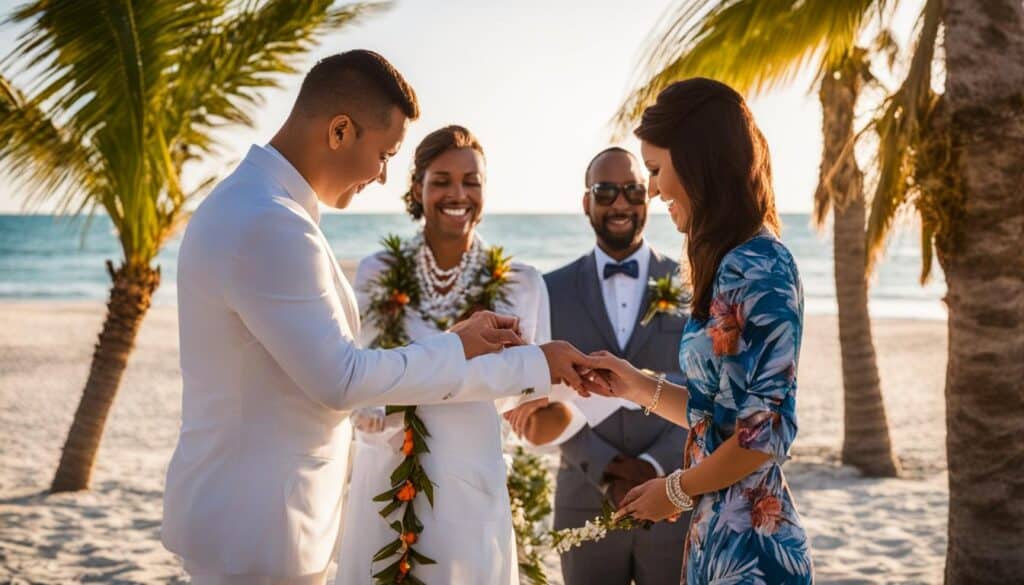
Public beach weddings are the most popular option I see, and for good reason. Collier County beaches like Vanderbilt Beach, Delnor-Wiggins Pass State Park, and Clam Pass offer stunning Gulf views. You’ll need a beach event permit from the county, but the cost is minimal compared to a traditional venue.
Lee County beaches work well too, especially Lovers Key State Park near Fort Myers and Barefoot Beach in Bonita Springs. Sunset ceremonies on the Gulf Coast face directly west, so the light is spectacular.
Resort and Hotel Venues
Naples has several resorts with full wedding coordination: LaPlaya Beach & Golf Resort, Naples Grande Beach Resort, and The Inn on Fifth are popular choices. Marco Island offers the JW Marriott and Hilton, both with Gulf-front ceremony spaces.
Gardens, Parks, and Private Venues
Naples Botanical Garden is a gorgeous option for couples who want lush tropical landscaping without sand in their shoes. Cambier Park in downtown Naples and Riverside Park in Bonita Springs offer quieter settings. Private waterfront homes or vacation rentals work well for intimate ceremonies where you want the reception in the same spot.
In my experience across 8+ years and hundreds of ceremonies, about 60% of my couples choose beach ceremonies, 25% go with resort or hotel venues, and 15% choose private homes, parks, or gardens. The split has shifted toward more intimate settings in the past two years.
Citation capsule: Southwest Florida offers public beach ceremonies (Vanderbilt Beach, Delnor-Wiggins Pass, Lovers Key), resort venues (LaPlaya, Naples Grande, JW Marriott Marco Island), and garden settings (Naples Botanical Garden). Most venues are available year-round, with peak demand from January through April.
What Does Your Wedding Day Timeline Look Like?
A well-planned ceremony day in Southwest Florida typically runs three to four hours from arrival to departure, though beach elopements can wrap up in under an hour. Most of my couples opt for late afternoon ceremonies to catch the Gulf sunset, which falls between 5:45 PM (winter) and 8:30 PM (summer) in Naples.
Sample Timeline for a 5:30 PM Beach Ceremony
- 3:30 PM: Officiant arrives, confirms setup with photographer and any vendors
- 4:00 PM: Couple arrives for photos (first look, if doing one)
- 4:30 PM: Guests begin arriving
- 5:00 PM: Pre-ceremony music, seating
- 5:30 PM: Ceremony begins (15-30 minutes depending on readings and unity ceremonies)
- 6:00 PM: Ceremony ends, license signing, family photos
- 6:15 PM: Golden hour couple portraits with sunset backdrop
One tip I always share: if you’re doing a beach ceremony, account for the tide. High tide pushes the water closer and narrows the beach. Your photographer and officiant should both know the tide schedule for your date. I check the NOAA tide charts before every beach ceremony.
I arrive at least 30 minutes before the ceremony (one hour for Custom “I Do!” packages). That buffer has saved me more times than I can count, from wind blowing over arches to guests arriving at the wrong beach access point. Build in more time than you think you need.
What Happens After the Ceremony?
After your ceremony, there are two things that must happen for your marriage to be legal. First, your officiant completes and signs the marriage license. Second, the signed license gets filed with the county clerk within 10 days, per Florida Statute 741.08.
I handle the filing for every couple I work with. It’s part of all three of my packages. Once filed, the clerk processes the certificate and it becomes a public record. You can request certified copies from the Collier County Clerk of Courts (or whichever county you filed in).
Post-Wedding Checklist
- Name change (if applicable): Update your Social Security card first, then driver’s license, then bank accounts and other records
- Certified copies: Order 3-5 certified copies of your marriage certificate. You’ll need them for name changes, insurance, and legal documents.
- Thank your vendors: Reviews on Google and wedding directories help small businesses like mine, and they genuinely matter
For the full breakdown of the marriage certificate, filing process, and certified copies, see my Florida certificate of marriage guide.
Citation capsule: Florida Statute 741.08 requires the signed marriage license to be filed with the county clerk within 10 days of the ceremony. Once filed, the marriage certificate becomes a public record. Certified copies can be requested from the county clerk’s office where the license was filed.
Frequently Asked Questions
How long does it take to get married in Florida?
Florida residents who complete a premarital course can get married on the same day they receive their license. Non-Florida residents can also marry immediately, since Florida Statute 741.04(5) exempts them from the 3-day waiting period automatically. The ceremony itself typically takes 15 to 30 minutes. Most couples complete the entire process within one to two weeks of deciding to get married.
Do you need witnesses to get married in Florida?
No. Florida does not require witnesses for a legal marriage. Many couples choose to have friends or family sign the license as a personal gesture, but it’s completely optional under Florida law.
How much does it cost to get married in Florida?
The marriage license costs approximately $93.50 in Collier County (2026 rates), with a $32.50 discount for completing a premarital course. Officiant fees range from $245 to $795 depending on the level of ceremony customization. Beach permits, photography, and flowers are additional. A simple beach elopement in SWFL can cost under $500 total.
What’s the best time of year for a Florida wedding?
Dry season, November through April, offers the best weather in Southwest Florida. Temperatures range from 65 to 85 degrees with minimal rain. January through March is peak demand, so book your officiant and venue early. Summer weddings work but bring daily afternoon thunderstorms, higher humidity, and the start of hurricane season in June.
Can non-residents get married in Florida?
Yes. Florida has no residency requirement for marriage, and non-Florida residents are automatically exempt from the 3-day waiting period under Florida Statute 741.04(5). You can apply for the license and marry the same day. For the complete non-resident process, read my guide on how to get married in Florida as a non-resident.
Does how you get married in the state of Florida change from county to county?
The law is identical statewide, but a few details sit with each county clerk. Every county follows the same Florida statutes for licenses, waiting periods, and officiant authorization, so how you get married in the state of Florida does not change wherever you go. What can differ is the license fee (Collier County charges about $93.50) and whether the clerk offers same-day issuance or requires an appointment. Once issued, your license is valid at any location in Florida, so you can apply in one county and marry in another.
Your Next Step
Learning how to get married in Florida is one of the simplest legal processes in the country. Get your license, choose someone who’ll honor your ceremony the way it deserves, and pick a setting that feels right. Southwest Florida gives you Gulf Coast sunsets, tropical gardens, and a pace of life that lets you actually enjoy the day instead of rushing through it.
If you’re planning a ceremony in Naples, Fort Myers, Marco Island, Bonita Springs, or anywhere in Southwest Florida, I’d love to hear about what you’re envisioning. Take a look at my ceremony packages starting at $245, or reach out and we’ll talk through the details together.
Wondering who signs your license? See what people who marry people are called and who may legally do it in Florida.