It’s one of the most common questions I hear from couples planning their wedding here in Southwest Florida: when should we book our officiant? After eight-plus years of officiating ceremonies, from beachfront sunsets in Naples to intimate garden weddings on Marco Island, my short answer is this: the sooner, the better. According to WeddingWire’s planning survey (2024), couples who book key vendors 9-12 months out report 40% less planning stress than those who wait. Your officiant shapes the most important 20 minutes of your day, and finding the right person takes more than a quick Google search.
TL;DR: Book your wedding officiant 6-12 months before your ceremony. In Southwest Florida’s peak season (November through April), popular dates fill up fast, so 9-12 months is ideal. For elopements and courthouse-style ceremonies, even 24-hour notice can work with the right officiant.
How Far in Advance Should You Book a Wedding Officiant?
The ideal window is 6-12 months before your wedding date. A 2024 survey by The Knot found that 70% of couples book their officiant within 10 months of their wedding. That lines up with what I see in my own calendar. By late fall, my Saturday dates for the following winter and spring are mostly claimed.
Here’s what I’ve noticed over the years. Couples who reach out early tend to feel more relaxed throughout the entire planning process. We have time to talk, get to know each other, and craft a ceremony that actually reflects who they are. Couples who book last-minute can absolutely still have a beautiful ceremony, but the breathing room just isn’t the same.
12+ months out: peak season planners
If you’re getting married in Southwest Florida between November and April, this is smart timing. Peak season in Naples, Fort Myers, and the surrounding islands brings a flood of weddings. Venues fill up, photographers get booked, and officiants are no different. Booking a year out guarantees your first-choice date and gives us plenty of time for consultations.
6-12 months out: the sweet spot
This is where most of my couples land. You’ve locked in your venue, picked a date, and now you’re assembling your vendor team. Six months is enough time to meet, discuss your vision, and write or customize your ceremony. If you’re choosing my Custom “I Do!” package, I recommend at least this much lead time so we can include all the personal touches you want.
3-6 months out: still doable
You can absolutely find a great officiant in this window, especially during SWFL’s quieter summer months (May through October). Weekday and Sunday ceremonies are often available even with shorter notice. I’d suggest reaching out as soon as you have a confirmed date and venue so we can hold your spot.
Last minute: yes, even 24-hour notice
I’ve performed ceremonies with less than a day’s notice, and they were just as meaningful. Elopements, courthouse-style celebrations, and spontaneous “let’s just do it” moments are part of what makes this work so joyful. My Quick “I Do!” package ($245) is designed exactly for these situations. If you have your marriage license in hand, we can make it happen.
Citation capsule: According to The Knot’s 2024 wedding survey, 70% of couples book their officiant within 10 months of the ceremony. In Southwest Florida’s November-through-April peak season, booking 9-12 months ahead is recommended because weekend dates fill quickly for officiants serving Naples, Fort Myers, and Marco Island.
Why Does SWFL’s Wedding Season Affect Booking?
Southwest Florida’s peak wedding season runs November through April, and it’s driven by the weather. Average winter temperatures hover around 75 degrees with low humidity, which is why the Naples, Marco Island & Everglades Convention and Visitors Bureau reports that tourist season brings roughly double the area’s year-round population. That means more weddings competing for the same venues, beaches, and vendors.
During peak season, I typically officiate 3-5 ceremonies per week. My Saturdays fill first, followed by Fridays and Sundays. By contrast, summer months are beautifully flexible. June through September brings afternoon rain showers, but morning and sunset ceremonies are still gorgeous. And availability opens up significantly.
Something most planning guides don’t mention: February and March are the tightest months in SWFL, not December. Snowbird season peaks in those months, and many couples from the Northeast plan destination weddings during that window. If you’re flexible on timing, an early November or late April date gives you peak-season weather with less competition for vendors.
Citation capsule: Southwest Florida’s peak wedding season spans November through April, with February and March being the most competitive months for vendor availability. Morning and sunset ceremonies remain viable year-round, though summer’s afternoon rain showers require flexible timing for outdoor celebrations in Naples and Fort Myers.
What Happens During a Booking Consultation?
A good officiant consultation is really a conversation, not a sales pitch. According to the American Marriage Ministries, the ceremony is consistently ranked as the most meaningful part of the wedding by guests and couples alike. That’s why I take this meeting seriously.
Here’s what a typical consultation with me looks like:
- We talk about your story. How did you meet? What do you love about each other? What values matter most in your relationship? This is the foundation for everything.
- We discuss ceremony style. Do you want spiritual elements, religious readings, humor, poetry, or something purely personal? Bilingual? I officiate in both English and Spanish, and many couples here in Naples choose a mix of both.
- We cover logistics. Venue, timing, unity ceremonies (sand blending, candle lighting, tree planting), vow format, and who’s in the wedding party.
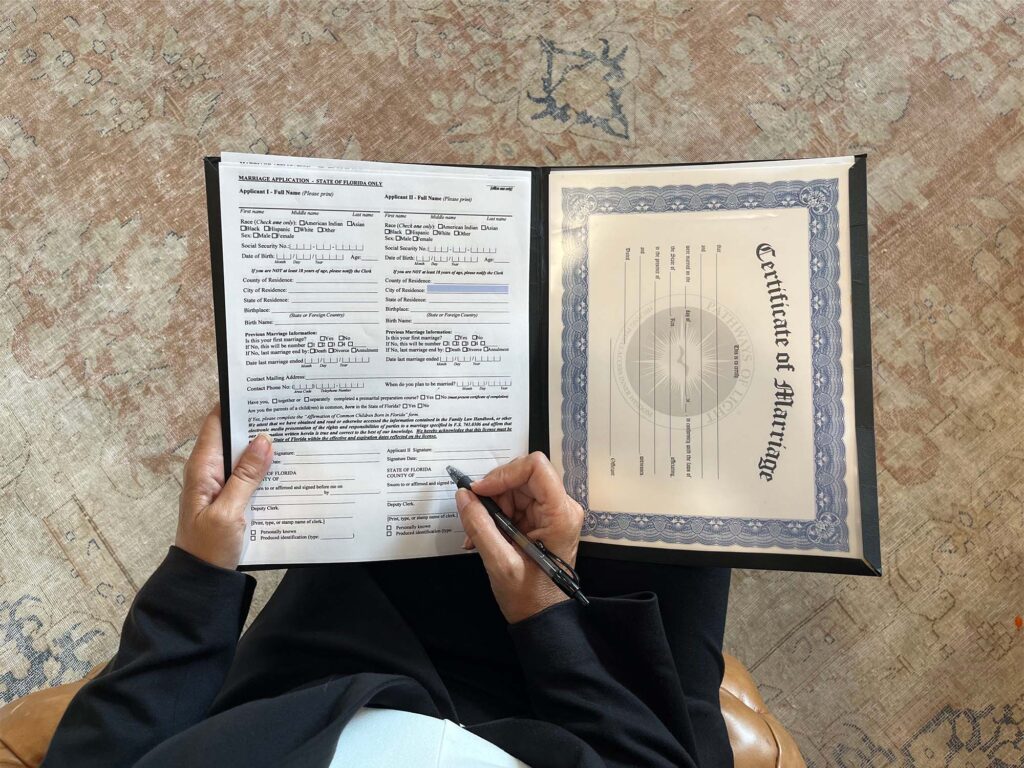
- We review the legal side. I walk you through the Florida marriage license process and what happens with the signed certificate after the ceremony.
The whole conversation usually takes 20-30 minutes by phone or Zoom. By the end, you’ll know exactly how your ceremony will feel, and whether we’re the right fit.
What Should You Ask Before Booking an Officiant?
Choosing the right officiant is personal. A Brides.com checklist suggests asking at least 8-10 questions before signing a contract. Here are the ones I think matter most:
- Are you legally authorized to perform marriages in Florida? (Not all online ordinations are accepted in every county.)
- Have you officiated at my venue before?
- Can you perform a bilingual ceremony if needed?
- What’s your backup plan if you get sick or have an emergency?
- Do you handle the marriage license paperwork and filing?
- How customizable is the ceremony script?
I always have a backup officiant on call, and I handle all the legal paperwork from signing to filing. For a deeper look at who’s qualified to marry you in this state, check out our guide on who can officiate a wedding in Florida.
Citation capsule: Before booking a wedding officiant, couples should confirm legal authorization under their state’s marriage statutes, ask about backup plans for emergencies, and verify whether the officiant handles marriage license paperwork and filing. In Florida, ordained ministers, judges, clerks, and notary publics can legally officiate under Statute 741.07.
Can You Book a Wedding Officiant Last Minute?
Yes, and it happens more often than you’d think. The Knot’s 2024 Real Weddings Study found that elopements and micro-weddings now account for roughly 1 in 4 ceremonies nationwide. Many of those happen on short timelines.
I’ve officiated elopements with just a few hours’ notice. One couple called me on a Tuesday morning, and we held a sunset ceremony on Naples Beach that same evening. As long as you already have your Florida marriage license (which out-of-state couples can get with no waiting period), a same-day ceremony is completely possible.
My Quick “I Do!” package at $245 covers everything you need: the oath of marriage, time for photos, license signing, and a keepsake copy of your ceremony. Simple, legal, and still meaningful.
Frequently Asked Questions
How much does a wedding officiant cost in Southwest Florida?
Officiant fees in SWFL typically range from $200 to $800 depending on the level of customization. My packages start at $245 for a Quick “I Do!” ceremony and go up to $795 for a fully customized experience with unlimited consultations. The CostofWedding.com (2024) national average for officiant fees is $280, though custom and destination ceremonies run higher. Visit our packages page for full details.
Do I need to book the officiant before or after the venue?
Book the venue first, then the officiant. Your venue determines the date, time, and setting, all of which affect whether an officiant is available. Once you have a confirmed date, reach out to officiants right away. In peak season, waiting even a few weeks can mean your preferred officiant is already booked on that Saturday.
What if my officiant cancels last minute?
Always ask about backup plans during your consultation. I keep an alternate officiant on call specifically for emergencies or scheduling conflicts. If something unexpected happens, your ceremony still goes forward. This is one of the most important questions to ask when interviewing any officiant.
Can a wedding officiant perform a bilingual ceremony?
Not all officiants offer this, but bilingual ceremonies are one of my specialties. I officiate in both English and Spanish, weaving both languages throughout the ceremony so every guest feels included. With Southwest Florida’s diverse community, bilingual ceremonies are increasingly popular among couples in Naples and Fort Myers.
Ready to Talk About Your Ceremony?
The best time to book your officiant is whenever you’re ready to start the conversation. Whether your wedding is a year away or a week away, I’d love to hear about what you’re planning. Every ceremony I perform is personal, and that starts with a simple phone call or message.
You can reach out here or call me directly at 813.714.7525. I’m available seven days a week and happy to answer any questions about your ceremony, the legal process, or what to expect on the day itself.