Last updated: July 2026 · Reviewed by Rev. Maria Felipe, Naples wedding officiant
Florida makes it remarkably easy for non-residents to get married here, and I see it firsthand every week. Couples fly into Naples, Marco Island, and Bonita Springs from all over the country (and the world) for a Southwest Florida wedding. Having officiated hundreds of ceremonies in SWFL since 2019, I can tell you the process is simpler than most people expect. The biggest surprise? There’s no residency requirement, and the often-cited 3-day waiting period does not actually apply to non-residents under Florida law.
This guide covers everything you need to know about getting married in Florida as a non-resident, from picking the right county clerk to using the statutory non-resident exception, beach permits, premarital course rules, divorce documentation, and what changes if you’re an international or same-sex couple flying in from out of state.
TL;DR: Florida has no residency requirement for marriage licenses. Per Florida Statute 741.04(5), non-Florida residents are statutorily exempt from the 3-day waiting period that applies to residents. Both partners must appear in person with valid photo ID. The license fee is $86 in most counties ($93.50 in Collier per 2026 rates) and is valid statewide for 60 days. In practice, clerk offices vary in how proactively they apply the non-resident exception, so I always tell my couples to explicitly mention they’re non-residents at the counter and ask for the exception to be applied.
Key Takeaways
1. Florida Statute 741.04(5) gives non-residents an automatic exception to the 3-day waiting period. In theory, your license is effective the day it’s issued.
2. County clerk practice varies. Some clerks apply the exception automatically. Others apply the 3-day delay unless you ask. Always confirm with the specific office before locking in your ceremony date.
3. You can apply at any Florida county clerk and use the license anywhere in the state. Collier, Lee, and Charlotte are the three closest options for a SWFL wedding.
4. Beach ceremonies on public sand need a county or city permit ($25 to $300 depending on location and guest count). Indoor venues handle this for you.
5. Previously married? Bring a certified divorce decree or death certificate. International couples should ask the clerk about apostilles and translations weeks before flying out.
What Are Florida’s Marriage License Requirements for Non-Residents?
Florida imposes no residency requirement for marriage licenses, per Florida Statute 741.04. Any couple of legal age can walk into a county clerk’s office, apply, and receive a license that’s valid anywhere in the state for 60 days. The minimum age is 18, with a narrow exception for 17-year-olds who have written parental consent and whose partner is not more than two years older.
Both partners must appear together at the clerk’s office. No proxy, no remote signing. You’ll each need a valid government-issued photo ID: a driver’s license, a passport, or a military ID work. You’ll also need your Social Security number if you have one. If you don’t have an SSN, the statute allows international applicants to provide an alien registration number or another form of identification.
Florida Residents vs. Non-Residents at a Glance
| Requirement | Florida Residents | Non-Residents |
|---|---|---|
| Residency needed? | No | No |
| Minimum age | 18 (or 17 with consent and ≤2-year age gap) | 18 (or 17 with consent and ≤2-year age gap) |
| 3-day waiting period | Yes, unless premarital course completed or good-cause waiver granted | Statutory exception applies (clerk shall grant) |
| License valid for | 60 days | 60 days |
| Valid statewide? | Yes | Yes |
| Both parties present at application? | Yes | Yes |
| Blood test required? | No | No |
| Witnesses at ceremony? | Not required | Not required |
| Typical license cost | $61 with premarital course, $86 without | $86 ($93.50 in Collier) |
Citation capsule: Under Florida Statute 741.04, there is no residency requirement to obtain a Florida marriage license. The same statute, subsection 5, grants automatic exceptions to the 3-day waiting period for non-Florida residents and for couples asserting hardship. The license is valid for 60 days and accepted statewide.
Not sure who can legally perform your ceremony? Read my guide on who can officiate a wedding in Florida.
How Do You Choose Between Collier, Lee, and Charlotte County Clerks?
You can apply at any Florida county clerk’s office, and the license works statewide. For a Southwest Florida wedding, the three closest options are Collier (Naples, Marco Island), Lee (Bonita Springs, Fort Myers, Sanibel, Captiva), and Charlotte (Punta Gorda, Port Charlotte). The fee is roughly the same, but the experience varies, and so does how proactively each office applies the non-resident waiting-period exception.
I usually point couples to the clerk closest to their hotel. Walking into a busy clerk’s office tired from a flight isn’t ideal, and parking in downtown Naples on a Friday afternoon during peak season can cost you 45 minutes you didn’t budget for. Pick the office that fits your trip rhythm, not the one nearest the ceremony.
Southwest Florida County Clerk Comparison
| County | License Fee (2026) | Online Pre-App? | Hours | Main Office |
|---|---|---|---|---|
| Collier | $93.50 | Yes | Mon to Fri, 8 a.m. to 5 p.m. | 3315 Tamiami Trail E, Naples |
| Lee | $86 | Yes (Lee eClerk portal) | Mon to Fri, 8:30 a.m. to 5 p.m. | 2115 Second St, Fort Myers |
| Charlotte | $86 | Yes | Mon to Fri, 8 a.m. to 5 p.m. | 350 E Marion Ave, Punta Gorda |
Fees and hours can change, and clerk practice on the non-resident waiting-period exception is not perfectly uniform. Verify directly with the clerk before you fly: Collier County Clerk, Lee County Clerk, Charlotte County Clerk.
Citation capsule: Florida marriage licenses are issued by county clerks but recognized statewide. For Southwest Florida weddings, Collier ($93.50), Lee ($86), and Charlotte ($86) are the three closest offices, all offering online pre-application portals that save 20 to 30 minutes at the counter. Clerk practice on the statutory non-resident waiting-period exception varies, so confirm with the office you plan to use.
How Does the Non-Resident Waiting-Period Exception Actually Work?
This is the part that surprises most couples. The 3-day waiting period everyone talks about is real, but it isn’t supposed to apply to you if you’re a non-resident. Florida Statute 741.04(5) reads: “The clerk shall grant exceptions to the delayed effective date requirement to non-Florida residents and to couples asserting hardship.” In plain English, the law says non-residents skip the wait.
In practice, clerk offices apply this in three different ways. Some recognize the exception automatically when they see out-of-state IDs and issue a license that’s effective the day of application. Others apply the 3-day delay by default and only remove it when you ask. A small number have local procedures that require you to fill out a short non-resident affidavit at the counter. After eight years of helping couples through this, my honest advice is to plan as if you have flexibility, but ask the question directly at the counter so you don’t have to guess.
What to Say at the Counter
Walk up to the clerk and say: “We’re non-residents flying in from [state] for a wedding in [days/date]. Under Florida Statute 741.04, can you apply the non-resident exception to the 3-day waiting period?” The good ones know the statute by heart. The newer ones may need to check with a supervisor, but they’ll do it. I’ve never seen a SWFL clerk refuse the exception when a couple asked politely.
Realistic Trip Planning
- If the clerk applies the exception: Land any day, apply same day or next, ceremony as early as that afternoon. You really do only need to be in Florida for the day of application and the day of ceremony.
- If you want a safety buffer: Arrive two days before the ceremony. Apply on day one. Even in the rare case where a clerk insists on the 3-day delay, you only burn one extra day.
- If you’re moving the ceremony around real life: Build in a four-day buffer. It removes every variable and gives you time to enjoy Naples beaches, rehearsal dinner, and getting ready.
I had a couple from Chicago who landed in Naples on a Friday morning for a Saturday afternoon wedding. The clerk applied the non-resident exception without us even asking. License effective the same day, ceremony 26 hours later. Smooth. I tell that story because most couples assume the worst-case timeline. The actual statute is friendlier than the rumor.
Citation capsule: Florida Statute 741.04(5) grants an automatic exception to the 3-day waiting period for non-Florida residents and couples asserting hardship. Clerk offices apply this in slightly different ways, so couples should ask explicitly for the non-resident exception at the counter. Plan for a two-day minimum trip as a safety buffer, even though the statute permits a same-day-effective license for non-residents.
Do You Need a Premarital Course or Other Special Forms?
Most non-residents don’t need a premarital course because they already qualify for the waiting-period exception through their non-resident status. The course itself is a 4-hour class covering communication, conflict resolution, financial responsibilities, and the legal framework of marriage, per Florida Statute 741.0305. Couples who complete it (resident or non-resident) get the wait waived and the license fee reduced by $32.50.
For non-residents flying in for a destination wedding, the course is usually unnecessary. You’re already exempt from the wait under 741.04(5), and the $32.50 fee reduction rarely offsets the time and effort of completing a Florida-registered course while traveling. Most of my couples skip it.
Beyond that, the forms are simple. Both partners complete a single application at the clerk’s counter (or online in advance through the county portal). You’ll list parents’ full names and birthplaces. You’ll affirm under oath that there’s no legal barrier to the marriage. That’s the entire paperwork load for the license itself.
Citation capsule: Florida Statute 741.0305 allows a 4-hour premarital preparation course taught by a state-registered provider to waive the 3-day waiting period and reduce the license fee by $32.50. Most non-resident couples skip the course because they already qualify for the waiting-period exception under 741.04(5).
What If You Were Previously Married or Are an International Couple?
If either of you has been married before, you’ll need proof that the previous marriage ended. Per Florida Statute 741.041, the clerk wants a certified copy of the divorce decree or the deceased spouse’s death certificate. A photocopy from your home file is not enough. You’ll need the certified version issued by the court or state vital records office, with the raised seal or color stamp.
Same-sex couples are fully recognized under Florida law since Obergefell v. Hodges (2015). The Florida marriage license lists both partners equally on the application, and the process is identical to any other couple. I’ve officiated same-sex weddings on Naples beaches for couples flying in from states with thinner protections, and the Florida legal piece is clean.
International Couples: A Few Extra Steps
International couples can absolutely get married in Florida. A passport works as the primary ID at the clerk’s counter. If your previous marriage ended in another country, the divorce decree usually needs to be translated to English and accompanied by an apostille (or a foreign-language affidavit, depending on the country). Call the clerk a few weeks before you fly to confirm what they’ll accept.
One couple I worked with flew in from Germany. The bride had been divorced in Munich, and her decree was in German. She brought the original plus a certified English translation and an apostille from the German Federal Office of Justice. The Collier clerk accepted it without issue, but she did the translation work two months in advance. Don’t leave that to the last week.
Once you’re married in Florida, your marriage is recognized worldwide. If you need to register the marriage back home (some countries require this for tax or visa purposes), the clerk can issue a certified marriage certificate with an apostille for an additional fee. Allow two to four weeks to receive it.
Citation capsule: Previously married couples need a certified divorce decree or death certificate at the clerk’s counter under Florida Statute 741.041. Same-sex couples are fully recognized statewide since 2015. International couples should arrive with certified English translations and an apostille for any foreign-language documents.
When Is the Best Time of Year for a Southwest Florida Wedding?
Southwest Florida’s dry season runs from November through April, and that’s when most destination weddings happen here. Average temperatures range from 65 to 85 degrees Fahrenheit during these months, per the National Weather Service Miami forecast office. Rain is rare, humidity is manageable, and sunset ceremonies on the Gulf Coast are quietly spectacular.
From what I’ve seen officiating in Naples and Bonita Springs, January through March offers the best combination of weather and venue availability. February and March are peak season, so if you want a specific beach or resort, book early. December is also lovely, and you’ll often find better availability because many venues haven’t booked up with holiday corporate events.
Season-by-Season Breakdown
- November to April (dry season): Ideal conditions. Low rain, comfortable temperatures. This is prime wedding season in SWFL.
- May to June: Warming up, occasional afternoon showers. Workable for morning or sunset ceremonies. Prices drop noticeably.
- July to October (wet season): Daily afternoon thunderstorms, high humidity. Budget-friendly, but you’ll need a rain backup plan. Hurricane season runs June through November.
If you’re flying in from a northern state, the warmth alone is worth it. I’ve officiated January beach ceremonies where the couple’s guests were shedding layers while their friends back home texted photos of snowstorms.
How Do You Choose a Venue When Planning from Out of State?
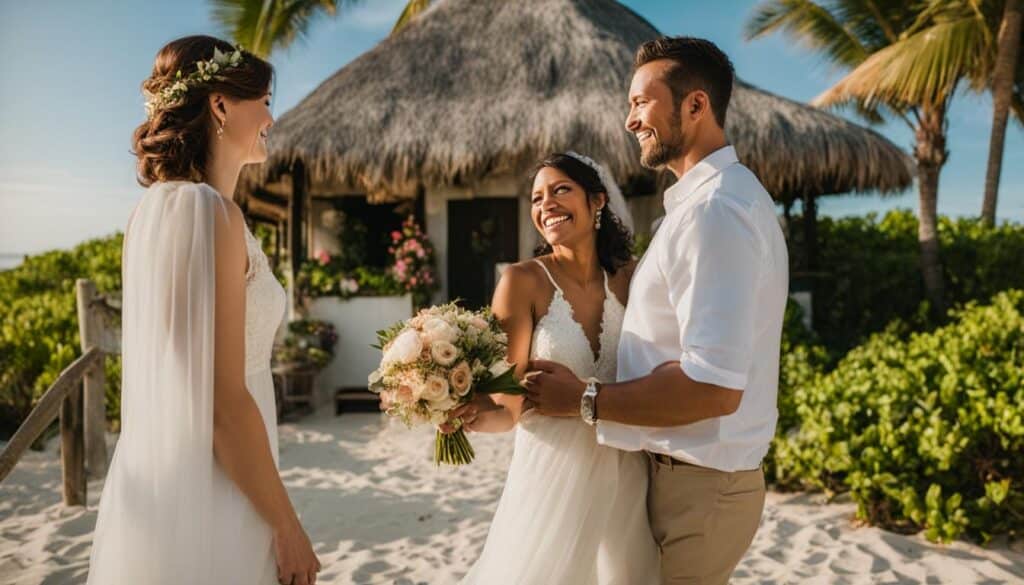
Planning a venue from hundreds of miles away feels daunting, but Southwest Florida has options for every style and budget. Naples alone has more than 30 beach access points, and many couples choose a simple beach ceremony that requires only a county or city beach wedding permit. Indoor venues, resorts, and gardens handle their own permit and setup logistics.
Most of my non-resident couples find their venue through a mix of online research and a few video calls. I’ve performed ceremonies everywhere from the Naples Pier to sunset gatherings on Marco Island, intimate park ceremonies in Bonita Springs, and private estate ceremonies in Estero. When couples ask for recommendations, I’m happy to share what I know about specific locations and the realities of each one.
Beach Permit Cheat Sheet (Public Beaches)
| Beach | County/City | Permit Cost | Apply Through |
|---|---|---|---|
| Vanderbilt Beach | Collier County | Free with valid license (groups under 30) | Collier County Parks & Rec |
| Delnor-Wiggins Pass | Florida State Park | $50 to $150 by group size | Florida State Parks Special Use |
| Lovers Key | Florida State Park | $50 to $150 by group size | Florida State Parks Special Use |
| Bonita Beach (Bonita Springs) | City of Bonita Springs | $100 to $250 | Bonita Springs City Clerk |
| Fort Myers Beach (Times Square area) | Town of Fort Myers Beach | $150 to $300 | FMB Town Hall |
| Tigertail Beach (Marco Island) | Collier County | Free under 30 guests, fee above | Collier County Parks & Rec |
| Sanibel Causeway Islands | Lee County | $50 to $200 | Lee County Parks & Rec |
Permit fees and rules change. Always confirm current rates and group size limits with the county or city office before locking in a date. Most permits are issued same-week if your date is open.
Popular Venue Types for Destination Couples
- Public beaches: Free or low permit cost. Vanderbilt Beach, Delnor-Wiggins Pass, and Lovers Key are popular Collier and state choices. Sanibel and Fort Myers Beach cover Lee County.
- Resort hotels: Full-service coordination, guest accommodations on-site. They handle permits, setup, and rain backup.
- Parks and gardens: Naples Botanical Garden, Cambier Park, Riverside Park (Bonita). Quieter settings with natural beauty.
- Private homes or rentals: Vacation rentals with waterfront views work well for intimate ceremonies and receptions in one location.
Citation capsule: Non-resident couples getting married in Southwest Florida can choose from public beaches (with a county or city permit ranging from free to $300 by location and group size), resort hotels, botanical gardens, or private waterfront rentals. Naples, Marco Island, and Bonita Springs each offer distinct settings for destination ceremonies.
What Should Non-Resident Couples Know About the Ceremony Itself?
Florida law requires a licensed officiant to perform the ceremony and sign the marriage license, per Florida Statute 741.07. Beyond that, the ceremony format is entirely up to you. Florida doesn’t require specific vows, readings, or rituals. You have full freedom to design a ceremony that feels right for you, religious or not, traditional or completely your own.
I officiate ceremonies in both English and Spanish, which comes up often with non-resident couples who have bilingual families. Whether it’s a full bilingual ceremony or just a few words of welcome in Spanish for certain guests, it’s a beautiful way to honor everyone present.
One thing I recommend to every non-resident couple: confirm your officiant well in advance, especially during peak season (January through March). A good officiant will also help coordinate the marriage license paperwork, which takes the stress off your plate on the actual wedding day. After the ceremony, the officiant returns the signed license to the clerk, who then records the marriage and issues a certified marriage certificate within one to two weeks.
Citation capsule: Florida Statute 741.07 requires a licensed officiant to perform the ceremony and sign the marriage license, with no requirements on ceremony format, vows, or rituals. Non-resident couples have complete freedom to customize the ceremony, including bilingual or interfaith elements, religious or secular framing, and unity rituals of their choice.
Frequently Asked Questions
Can you get a Florida marriage license online as a non-resident?
Some Florida counties allow you to begin the application online, but both partners must still appear in person at the clerk’s office to finalize it. In Collier County, you can fill out the pre-application on the Collier County Clerk website before your visit. This saves time at the counter but doesn’t eliminate the in-person requirement.
Do non-residents really skip the 3-day waiting period?
Yes, under the letter of Florida Statute 741.04(5), which says “the clerk shall grant exceptions to the delayed effective date requirement to non-Florida residents.” In practice, some clerks apply this automatically and others apply the 3-day delay unless you specifically ask. Always raise the non-resident exception at the counter to be sure.
Is a Florida marriage license valid in other states and countries?
Yes. Under the Full Faith and Credit Clause of the U.S. Constitution, a marriage performed legally in Florida is recognized in all 50 states. International recognition follows the marriage laws of the country where you live, and most countries accept a certified Florida marriage certificate (with an apostille if required).
Do we need witnesses for a Florida wedding?
No. Florida is one of the states that does not require witnesses to sign the marriage license. Many couples still ask two people to sign as a meaningful gesture, but it’s entirely optional and has no legal effect.
What’s the minimum age to marry in Florida?
The minimum age is 18. There’s one narrow exception: a 17-year-old may marry with written parental or guardian consent, provided the older partner is not more than two years older. Anyone under 17 cannot marry in Florida under any circumstance.
Is proxy marriage allowed in Florida?
No. Both partners must be physically present at both the license application and the ceremony itself. Florida does not recognize proxy marriages performed in other jurisdictions either, which matters for military couples planning around deployments.
What happens if our marriage license expires before the ceremony?
Florida marriage licenses are valid for 60 days from the day of application. If you don’t use it within that window, the license expires and you’ll need to apply again (and pay the fee again). Reschedule with enough buffer that this doesn’t sneak up on you.
How do we get a certified marriage certificate after the ceremony?
After your officiant returns the signed license, the clerk records the marriage and mails the certified marriage certificate to the address you listed at application. Allow one to two weeks. Order extra certified copies at the time of license application (around $10 each) so you have them ready for name changes, passports, and Social Security updates.
How do we change our name on Social Security, driver’s license, and passport after a Florida wedding?
Start with Social Security (free, do this first). Bring your certified Florida marriage certificate and current ID to your local SSA office. Then update your home-state driver’s license (state-specific fee) and your U.S. passport (a $130 form DS-82 if your old passport is less than a year old, otherwise the full fee). Allow two to six weeks for each step.
What happens if it rains on our beach wedding day?
Southwest Florida afternoon showers are usually brief, especially during dry season. Most couples have a backup plan: a covered area at their venue, a nearby restaurant, or a simple time shift to avoid the rain. In my experience, rain rarely cancels a ceremony. It might delay one by 30 minutes. I’ve waited out a quick shower with couples many times, and we always laugh about it afterward.
Ready to Plan Your Florida Wedding from Out of State?
Getting married in Florida as a non-resident is more flexible than most couples expect. The statutory exception means your license can be effective the day you apply, so the only real constraints are getting both of you to a clerk’s office together and lining up an officiant who knows the local quirks. The rest is about choosing the right setting and the right people to stand with you. The legal piece is the simplest part of the day.
If you’re looking for a wedding officiant in Naples, Bonita Springs, Marco Island, or anywhere in Southwest Florida, I’d love to hear about what you’re planning. Take a look at my ceremony packages, read more about planning a destination wedding in Florida, or reach out directly and we’ll talk through the details together.