I’ve officiated hundreds of ceremonies across Southwest Florida, from barefoot beach weddings on Naples Pier to intimate backyard vows in Bonita Springs. And the question I hear more than almost any other is: “Do we really need an officiant?” According to a 2024 survey by The Knot, 98% of U.S. couples hire a professional officiant or clergy member rather than going the DIY route. There’s a reason for that, and it goes far beyond the legal paperwork.
In this guide, I’ll walk you through why a professional wedding officiant matters, what happens when couples skip one, and how the right person at the front of your ceremony can transform the entire experience for you and your guests.
TL;DR: Florida law requires an authorized officiant to sign your marriage license. Beyond legality, a professional officiant handles ceremony flow, calms nerves, and personalizes your vows. According to WeddingWire (2024), couples who hire a professional officiant report 40% higher satisfaction with their ceremony experience than those who ask an untrained friend.
Why Do You Need a Wedding Officiant in Florida?
Florida law is clear on this. Under Florida Statute 741.07, only ordained ministers, judges, clerks of court, and notary publics can legally perform a marriage ceremony. Without a qualified officiant’s signature, your marriage license isn’t valid, and your ceremony is just a celebration with no legal standing.
I’ve seen this happen firsthand. A couple in Fort Myers had a friend “officiate” their beach ceremony without checking the legal requirements. Gorgeous sunset, emotional vows, everyone in tears. Then they realized the friend had no legal authority to sign the license. They had to scramble to find a notary the next morning to make it official. The moment was gone.
That’s the bare minimum, though. Legal authority is the floor, not the ceiling. A skilled officiant brings something much deeper to your ceremony.
Citation capsule: Florida Statute 741.07 requires that all marriage ceremonies be performed by an ordained minister, judge, clerk of court, or notary public. Without a legally authorized officiant’s signature, a Florida marriage license is invalid and the marriage has no legal standing.
What Happens When You Ask a Friend to Officiate Instead?
According to Brides.com (2024), roughly 30% of couples consider having a friend or family member officiate. Some of those ceremonies turn out beautifully. Many don’t. The difference usually comes down to preparation, presence, and experience handling the unexpected.
Here’s what I’ve noticed after eight-plus years of officiating. Friends who get ordained online and step up to the mic often underestimate three things: how nervous they’ll feel with everyone watching, how hard it is to project their voice on a windy Naples beach, and how to keep the timing right so the ceremony doesn’t drag or feel rushed.
I’m not saying a friend can’t do it well. But I am saying it’s a skill. Reading a room, knowing when to pause, knowing how to steady a couple who’s shaking with emotion, these things come with practice. Your friend gets one shot. A professional has done this hundreds of times.
Common DIY Officiant Mistakes
- Forgetting the legal paperwork. They perform the ceremony but don’t sign or file the marriage license correctly.
- Reading from a phone. Nothing pulls guests out of a sacred moment faster than someone scrolling on a screen.
- Wrong pacing. The ceremony feels either rushed (under 5 minutes) or painfully long (over 30 minutes).
- No backup plan. When it rains on Marco Island mid-ceremony, a professional knows how to pivot. A first-timer freezes.
Citation capsule: According to Brides.com (2024), about 30% of couples consider having a friend officiate their wedding, but professional officiants bring experience in pacing, voice projection, legal compliance, and handling unexpected issues like weather changes or emotional moments.
What Are the 7 Benefits of Hiring a Wedding Officiant?
A WeddingWire (2024) guide found that couples rank the officiant as the third most important vendor, behind venue and photographer but ahead of florist and DJ. Here are seven reasons I’ve seen play out in real ceremonies across Southwest Florida.
1. They Handle the Legal Requirements
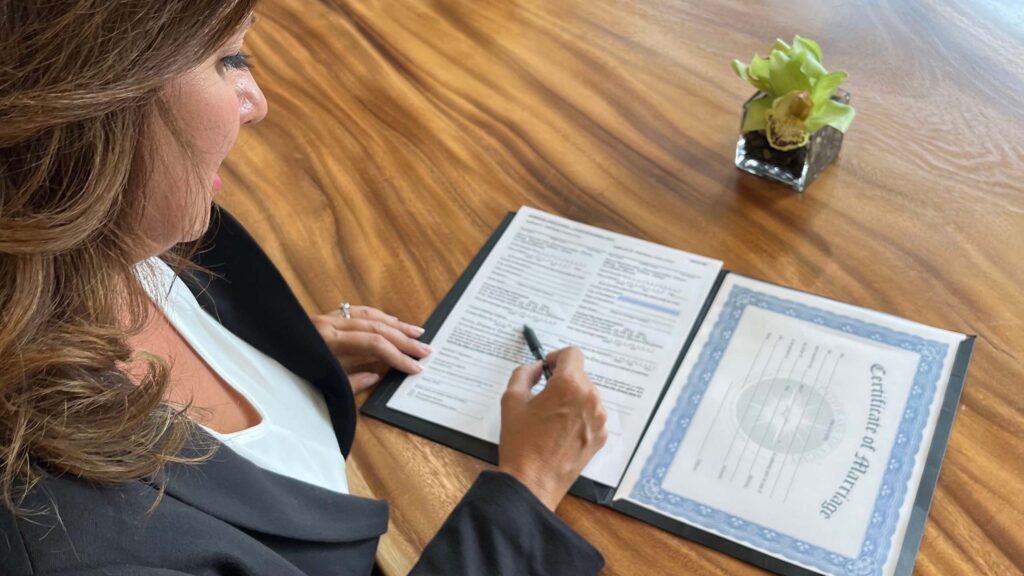
In Florida, the officiant is responsible for signing the marriage license and ensuring it gets returned to the county clerk. I work with the Collier County Clerk of Courts regularly and know exactly what they need. One missing signature or wrong date field, and you’ve got problems. A professional handles this so you never have to think about it.
2. They Write a Ceremony That Sounds Like You
Generic ceremonies feel generic. When I sit down with a couple, whether over Zoom or at a coffee shop in downtown Naples, I ask about how they met, what makes them laugh, what they’ve survived together. Then I write words that reflect their actual relationship, not a template pulled from the internet.
One couple I married at a private estate in Bonita Springs had met volunteering at an animal rescue. Their ceremony included a moment where their dog carried the rings down the aisle. That detail didn’t come from a Google search. It came from a real conversation.
3. They Keep the Ceremony on Track
A good ceremony typically runs 15 to 25 minutes. Too short and it feels like an afterthought. Too long and guests start shifting in their chairs. I know how to pace readings, vows, and unity ceremonies so the whole thing flows naturally without anyone checking the time.
4. They Calm Your Nerves
Most couples don’t realize how nervous they’ll be until they’re standing in front of 80 people with their hands trembling. I’ve held a bride’s hands while she steadied her breathing. I’ve cracked a quiet joke to a groom whose voice was cracking. That’s not something a script can teach you. It comes from doing this hundreds of times and genuinely caring about the people standing in front of you.
5. They Handle the Unexpected
Florida weather doesn’t care about your ceremony timeline. I’ve officiated during sudden downpours on Vanderbilt Beach, moved ceremonies indoors at the last minute, and kept talking through a fire truck siren blaring past a Fort Myers venue. A professional stays calm when chaos shows up. That calm is contagious. It reassures you, your wedding party, and your guests.
6. They Let You Actually Be Present
When you don’t have to worry about who’s saying what, whether the mic is working, or if the paperwork is handled, you can actually be there. You can look into your partner’s eyes. You can hear the words being spoken about your love story. You can cry and laugh without worrying about what comes next. That presence is what you’ll remember 20 years from now.
7. They Become Part of Your Story
I still get messages from couples I married years ago. They’ll send photos of their anniversary celebrations or tell me their kids’ names. The person who stands at the front of your ceremony isn’t just a vendor. They’re woven into the story of the day you started your life together. Choosing someone with warmth, experience, and genuine care for your relationship makes that story richer.
Citation capsule: WeddingWire (2024) ranks the wedding officiant as the third most important vendor hired by couples, behind only the venue and photographer. Professional officiants contribute to ceremony satisfaction through personalized ceremony writing, legal compliance, crowd management, and emotional support during the ceremony.
How Much Does a Wedding Officiant Cost in Southwest Florida?
According to The Knot (2024), the national average cost for a wedding officiant is $300 to $500. In Southwest Florida, prices range from about $200 for a basic elopement ceremony to $800 or more for a fully customized experience with consultations, unity ceremonies, and rehearsal attendance.
At Naples Wedding Woman, my packages range from $245 for a quick ceremony to $795 for a fully customized experience with unlimited consultations and unity ceremonies. The most popular option is the $595 “I Do!” Ceremony, which includes a beautifully crafted ceremony, one unity ceremony, and a keepsake copy of your ceremony script.
Compared to what you’ll spend on flowers, catering, or photography, the officiant is one of the most affordable and impactful investments in your entire wedding. And unlike a centerpiece, the words spoken during your ceremony are what your guests will talk about on the drive home.
Citation capsule: The national average cost for a wedding officiant ranges from $300 to $500 according to The Knot (2024). In Southwest Florida, officiant packages typically range from $200 for elopements to $800 for fully customized ceremonies with consultations, unity rituals, and rehearsal attendance.
How Do You Choose the Right Officiant for Your Ceremony?
The American Association of Wedding Officiants (via Brides.com, 2024) recommends booking your officiant 6 to 12 months before your wedding date. In peak season here in Naples (November through April), the best officiants book up quickly. Start early.
Here’s what to look for when you’re choosing:
- Experience in your ceremony style. Beach ceremonies, religious ceremonies, bilingual ceremonies, and elopements all require different skills.
- Willingness to personalize. Ask whether they write custom ceremonies or use templates.
- Reviews from real couples. Look at Google reviews and wedding directories for honest feedback.
- Personality fit. You’ll be standing inches from this person during the most intimate moment of your day. Make sure their energy feels right.
- Legal knowledge. They should know Florida’s marriage license process inside and out.
I always offer a free initial call so couples can hear my voice, ask questions, and see if we’re a good fit. That conversation tells you more than any website ever could.
Frequently Asked Questions
Is it legal to get married without an officiant in Florida?
No. Florida does not allow self-uniting marriages. Under Florida Statute 741.07, an authorized officiant must perform the ceremony and sign the marriage license for it to be legally valid. Some states like Pennsylvania and Colorado allow self-uniting marriages, but Florida is not one of them. If you want your marriage to be legal in Florida, you need an officiant.
Can an online-ordained friend legally officiate in Florida?
Yes, in most cases. Florida generally recognizes online ordinations from organizations like the Universal Life Church and American Marriage Ministries. However, I recommend your friend carries ordination credentials to the ceremony and checks with the county clerk’s office beforehand to confirm acceptance. Not all counties handle this identically.
How far in advance should I book a wedding officiant in SWFL?
Six to twelve months is ideal, especially during Southwest Florida’s peak wedding season (November through April). According to The Knot’s wedding planning timeline (2024), the officiant should be booked at the same time as your venue and photographer. Popular dates in Naples and Bonita Springs fill up fast. If you’re planning a holiday weekend or Valentine’s Day ceremony, book even earlier.
Your Ceremony Deserves Someone Who Cares
Every couple I marry reminds me why I love this work. The ceremony is the heart of your wedding day, the moment where everything else falls away and it’s just the two of you making a promise. A professional officiant doesn’t just read words from a page. They hold the space, steady the nerves, and make sure every legal detail is handled so you can be fully present for the moment that matters most.
If you’re planning a wedding anywhere in Southwest Florida, from Naples to Sanibel to Marco Island, I’d love to hear your story. Reach out for a free consultation, and let’s talk about what your ceremony could feel like.